 Wilfredor / CC0 · Source
Coleus
Coleus scutellarioides
Overview
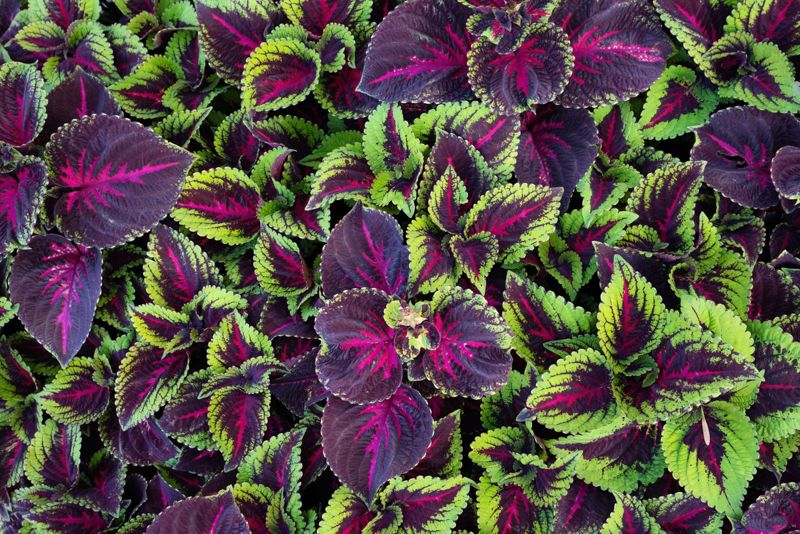
A tropical foliage plant that has experienced a renaissance, with modern cultivars offering extraordinary leaf patterns in every combination of green, purple, red, orange, pink, and chartreuse imaginable. Sun-tolerant varieties have revolutionized coleus from a shade-only plant to a versatile garden star. Though grown primarily as an annual in temperate climates, coleus is easily propagated from cuttings for year-round houseplants.
Growing Conditions
How to Grow Coleus
Coleus (Coleus scutellarioides) is a forb/herb that grows to about 2 feet tall and 2 feet wide.
Coleus is hardy across USDA hardiness zones 6–10. Plant it in rich, moist, well-drained soil or potting mix, at a slightly acidic pH of 6–7.
Exact sowing, transplanting, and harvest months shift by climate zone — the planting calendar below lays them out for cool through hot regions. Its flowers appear from May through August, offering high value to pollinators. Give it what it asks for here, and it will find its place in the garden.
Companion Planting & Soil
Coleus grows well alongside begonia, impatiens, fern, and caladium.
Good Companions
Planting Calendar
When to sow, transplant, and harvest by growing zone.
| Zone | Action | Months | Notes |
|---|---|---|---|
| Cold (1-2) | Start Indoors | Mar — Apr | Start indoors 8-10 weeks early; needs light to germinate; do not cover seed |
| Cold (1-2) | Transplant | Jun — Jun | Transplant after all frost; pinch flower spikes; take cuttings to overwinter |
| Cold (1-2) | Bloom | Jun — Sep | Grown for foliage; pinch blue flower spikes to maintain leaf production |
| Cool (3-4) | Transplant | May — Jun | Transplant after frost; part shade to full sun depending on variety |
| Cool (3-4) | Bloom | Jun — Oct | Vibrant foliage until frost; root cuttings in water for indoor winter plants |
| Moderate (5-7) | Transplant | Apr — May | Transplant in spring; Sun coleus tolerate full sun; shade types scorch |
| Moderate (5-7) | Bloom | May — Oct | Season-long foliage; hundreds of color patterns available |
| Warm (8-9) | Transplant | Mar — Apr | Plant in spring; brilliant foliage plant; pinch flowers |
| Warm (8-9) | Bloom | Mar — Nov | Nearly year-round foliage color |
| Hot (10+) | Transplant | Feb — Mar | Plant in early spring; thrives in heat with adequate water |
| Hot (10+) | Bloom | Feb — Nov | Long season; may survive mild winters as perennial |
Uses
Beyond the Garden
Coleus earns its keep past the plate, too: premier foliage plant for containers and bedding; easily propagated from cuttings in water; houseplant for bright indoor light.
The Field Library
Books from the Futurespore shelf that go deeper on plants like this one.
- Braiding Sweetgrass reframes growing and gathering as a relationship of reciprocity
- Gaia's Garden home-scale permaculture — guilds, food forests, and beds that tend themselves
These are Bookshop.org affiliate links — they support independent bookstores and earn Futurespore a small commission at no extra cost to you. Browse the full Futurespore Bookshelf.