 Sizableframe / CC0 · Source
Cardinal flowerWhen to plant, zone by zone
Overview
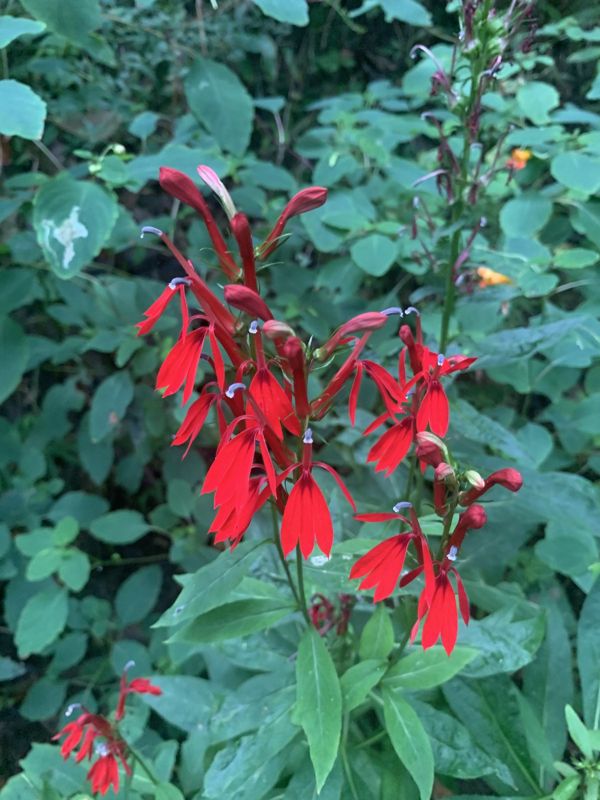
One of North America's most spectacularly colored native wildflowers, the cardinal flower produces spikes of intensely scarlet blooms that are perfectly shaped for hummingbird pollination. It thrives in moist woodland edges and stream banks where its brilliant red stands out against green foliage. Though short-lived as an individual plant, it freely self-seeds to maintain colonies.
How to Grow Cardinal flower
Plant it in rich, consistently moist to wet soil, at a slightly acidic pH of 5.5–7.
Exact sowing, transplanting, and harvest months shift by climate zone — the planting calendar below lays them out for cool through hot regions. It keeps its own chemistry; read the safety notes before any part reaches a plate.
Companion Planting & Soil
Cardinal flower grows well alongside bee balm, fern, hosta, and joe-pye weed.
Good Companions
Planting Calendar
When to sow, transplant, and harvest by growing zone.
| Zone | Action | Months | Notes |
|---|---|---|---|
| Cold (1-2) | Transplant | May — Jun | Plant in spring; native perennial to zone 3; needs moist soil and part shade |
| Cold (1-2) | Bloom | Jul — Aug | Brilliant red spikes attract hummingbirds; short-lived perennial — allow self-sowing |
| Cool (3-4) | Transplant | Apr — May | Plant in spring; hummingbird magnet; moist to wet soil |
| Cool (3-4) | Bloom | Jul — Sep | Midsummer to early fall bloom; premier hummingbird plant |
| Moderate (5-7) | Transplant | Mar — Apr | Plant in spring; stream-side, rain garden, or bog garden ideal |
| Moderate (5-7) | Bloom | Jun — Sep | Blooms summer through early fall; deadhead for rebloom |
| Moderate (5-7) | Divide | Mar — Apr | Divide every 2-3 years; short-lived but self-sows in moist conditions |
| Warm (8-9) | Transplant | Feb — Mar | Plant in late winter; needs afternoon shade in warm zones |
| Warm (8-9) | Bloom | May — Aug | Long bloom; let some seed heads mature for colony replacement |
| Hot (10+) | Transplant | Nov — Dec | Plant in fall; part shade mandatory; constant moisture |
| Hot (10+) | Bloom | Apr — Jul | Spring/summer bloom; needs shade and water |
Cardinal flower Questions
When should you plant Cardinal flower?
Cold (1-2) — transplant May–June; Cool (3-4) — transplant April–May; Moderate (5-7) — transplant March–April; Warm (8-9) — transplant February–March; Hot (10+) — transplant November–December. Shift these with your own last-frost date; the full table sits in the planting calendar below.
When does Cardinal flower bloom?
Cold (1-2) — July–August; Cool (3-4) — July–September; Moderate (5-7) — June–September; Warm (8-9) — May–August; Hot (10+) — April–July.
Is Cardinal flower edible?
No — Cardinal flower is recorded as toxic and should not be eaten. Read the safety notes on this page before eating any part of it.
What grows well with Cardinal flower?
Bee balm, Fern, Hosta, and Joe-pye weed.
Uses
Beyond the Garden
Cardinal flower earns its keep past the plate, too: premier hummingbird plant; streamside and rain garden planting; woodland garden color accent.
Safety Notes
A Lobelia — contains lobeline-type alkaloids and is toxic to eat. Grow it for the hummingbirds.
The Field Library
Books from the Futurespore shelf that go deeper on plants like this one.
- Gaia's Garden home-scale permaculture — guilds, food forests, and beds that tend themselves
- The Resilient Gardener growing staple food through drought, flood, and hard seasons
These are Bookshop.org affiliate links — they support independent bookstores and earn Futurespore a small commission at no extra cost to you. Browse the full Futurespore Bookshelf.