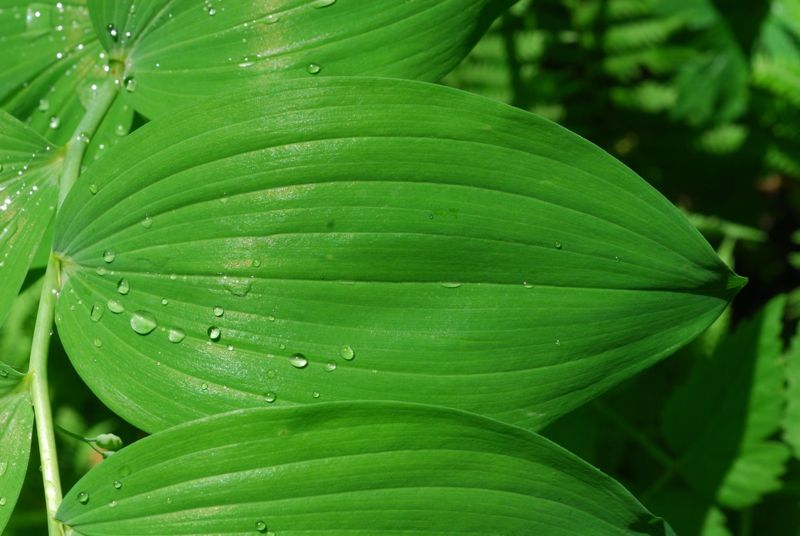
 Mark A. Garland. USA, NC, Jackson Co., Balsam, Daytona Road, cove forest. May 23 / Public domain · Source
Solomons seal
Polygonatum biflorum
Overview
An elegant native woodland perennial whose arching stems carry rows of dangling white bell-shaped flowers beneath the foliage. Solomon's seal spreads slowly by rhizome to form graceful colonies in shade gardens, and its fall display of blue-black berries is quietly beautiful. The name comes from the circular scars on the rhizome that resemble the seal of King Solomon.
How to Grow Solomons seal
Plant it in rich, moist, humusy woodland soil, at a slightly acidic pH of 5.5–7.
Exact sowing, transplanting, and harvest months shift by climate zone — the planting calendar below lays them out for cool through hot regions. Handle it with the respect a defended plant has earned — read the safety notes first.
Companion Planting & Soil
Solomons seal grows well alongside hosta, fern, astilbe, and wild ginger.
Good Companions
Planting Calendar
When to sow, transplant, and harvest by growing zone.
| Zone | Action | Months | Notes |
|---|---|---|---|
| Cold (1-2) | Transplant | Apr — May | Plant rhizomes in spring; elegant arching stems; shade perennial |
| Cold (1-2) | Bloom | May — Jun | White bell-shaped flowers dangle beneath arching stems; blue-black berries in fall |
| Cool (3-4) | Transplant | Mar — Apr | Plant in spring; moist, humus-rich woodland soil; shade to part shade |
| Cool (3-4) | Bloom | May — Jun | Late spring bloom; pairs beautifully with ferns and hostas |
| Moderate (5-7) | Transplant | Mar — Apr | Plant in spring; graceful arching stems with dangling white bells |
| Moderate (5-7) | Bloom | Apr — May | Spring bloom; yellow fall foliage; slowly forms colonies |
| Moderate (5-7) | Divide | Mar — Apr | Divide rhizomes in spring every 5+ years; each piece needs growing eyes |
| Warm (8-9) | Transplant | Feb — Mar | Plant in late winter; needs shade and consistent moisture |
| Warm (8-9) | Bloom | Mar — Apr | Early spring bloom; deer resistant |
| Hot (10+) | Transplant | Nov — Dec | Plant in fall; deep shade essential in hot zones |
| Hot (10+) | Bloom | Feb — Mar | Late winter/spring bloom |
Uses
Medicinal & Folk Use
In herbal and folk tradition, it has been valued in several ways: root poultice traditionally used for bruises and joint pain; tea from root used in Traditional Chinese Medicine for respiratory and kidney support. These are traditional uses, not medical advice.
Beyond the Garden
Solomons seal earns its keep past the plate, too: graceful native shade garden perennial; blue-black fall berries add seasonal interest; slowly colonizes for woodland ground cover.
Safety Notes
The berries are poisonous. Young shoots are historically foraged, but they emerge beside serious look-alikes — lily-of-the-valley among them — so this one is safest treated as a garden beauty, not a vegetable.
The Field Library
Books from the Futurespore shelf that go deeper on plants like this one.
- Braiding Sweetgrass reframes growing and gathering as a relationship of reciprocity
- Gaia's Garden home-scale permaculture — guilds, food forests, and beds that tend themselves
These are Bookshop.org affiliate links — they support independent bookstores and earn Futurespore a small commission at no extra cost to you. Browse the full Futurespore Bookshelf.