Calendula
Calendula officinalis
Overview
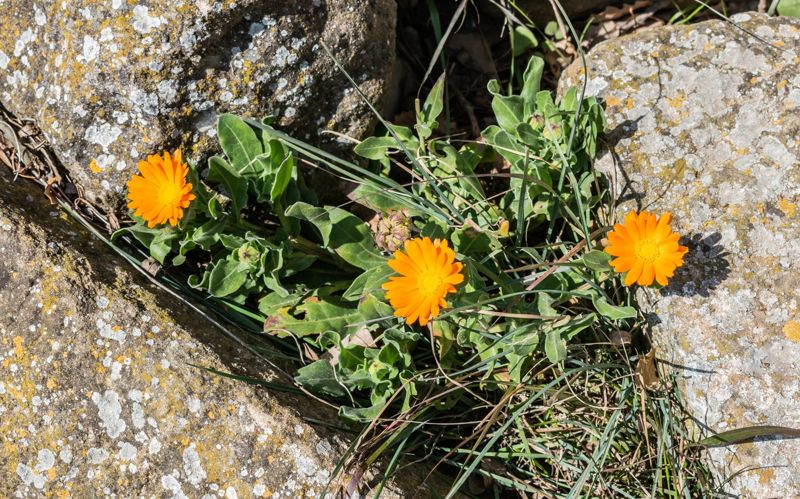
Often called pot marigold, calendula has been used in kitchens and apothecaries since the Middle Ages for its sunny orange and yellow blooms. This easy-growing annual is one of the most versatile medicinal herbs, with well-documented anti-inflammatory and wound-healing properties. Its petals add golden color to soups, rice, and salves alike.
Growing Conditions
How to Grow Calendula
Calendula (Calendula officinalis) is an annual forb/herb that grows to about 1.5 feet tall and 12 inches wide.
To grow calendula, give it full sun. It is hardy across USDA hardiness zones 2–11. Plant it in average, well-drained soil; tolerates poor soils, at a slightly acidic pH of 6–7. It does best with dry, sharply drained conditions.
Exact sowing, transplanting, and harvest months shift by climate zone — the planting calendar below lays them out for cool through hot regions. Its orange flowers appear from April through October, offering high value to pollinators. A generous plant — a harvest for you, and forage for the pollinators.
Companion Planting & Soil
Calendula grows well alongside tomato, asparagus, lettuce, and pea.
Good Companions
Planting Calendar
When to sow, transplant, and harvest by growing zone.
| Zone | Action | Months | Notes |
|---|---|---|---|
| Cold (1-2) | Direct Sow | May — Jun | Direct sow after last frost; easy from seed |
| Cold (1-2) | Harvest | Jun — Sep | Harvest open flowers; petals edible and medicinal; dry for tea |
| Cool (3-4) | Direct Sow | Mar — May | Direct sow in spring; deadhead for continuous bloom |
| Cool (3-4) | Direct Sow | Aug — Sep | Fall sowing for late season color |
| Cool (3-4) | Harvest | May — Jul | Pick flowers regularly; self-sows generously |
| Cool (3-4) | Harvest | Sep — Oct | Fall harvest |
| Moderate (5-7) | Direct Sow | Feb — Apr | Sow in late winter/early spring; tolerates light frost |
| Moderate (5-7) | Direct Sow | Sep — Oct | Fall sow for mild-winter bloom |
| Moderate (5-7) | Harvest | Mar — Jun | Spring bloom; deadhead for rebloom |
| Warm (8-9) | Direct Sow | Sep — Nov | Fall sow; blooms through winter in mild areas |
| Warm (8-9) | Harvest | Nov — Apr (wraps) | Blooms through cool season |
| Hot (10+) | Direct Sow | Oct — Dec | Fall sow for cool-season bloom; fades in heat |
| Hot (10+) | Harvest | Dec — Mar (wraps) | Winter bloom; edible petals add color to salads |
Uses
In the Kitchen
In the kitchen, calendula turns up in more than one form: petals used as a saffron substitute for color in rice and soups; fresh flowers added to salads; infused into oils and butters for golden color.
Medicinal & Folk Use
In herbal and folk tradition, it has been valued in several ways: infused oil and salve for wound healing and skin repair; anti-inflammatory and antifungal properties; tea used for sore throats and mouth inflammation. These are traditional uses, not medical advice.
Beyond the Garden
Calendula earns its keep past the plate, too: companion plant that attracts beneficial insects and repels pests; natural dye producing yellow and orange tones; ingredients in natural skincare products.
Safety Notes
Generally safe. Avoid during pregnancy. May cause allergic reactions in people sensitive to Asteraceae family.
The Field Library
Books from the Futurespore shelf that go deeper on plants like this one.
- Medicinal Herbs: A Beginner's Guide the friendliest on-ramp to growing and using healing herbs at home
- Northeast Foraging region-tuned wild food guidance with clear lookalike warnings
- Braiding Sweetgrass reframes growing and gathering as a relationship of reciprocity
These are Bookshop.org affiliate links — they support independent bookstores and earn Futurespore a small commission at no extra cost to you. Browse the full Futurespore Bookshelf.