 Rob Hille / Public domain · Source
Chamomile
Matricaria chamomilla
Overview
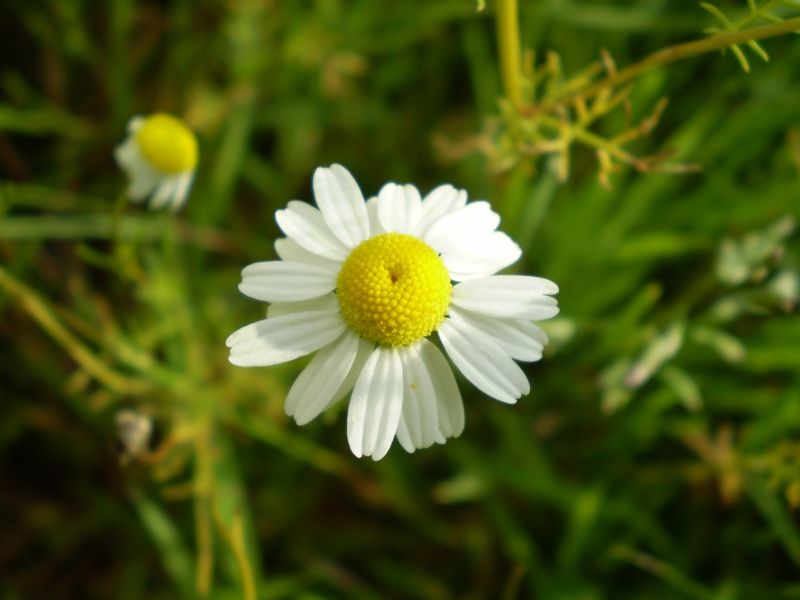
Perhaps the most beloved herbal tea plant in the world, chamomile has been used for its calming and healing properties since ancient Egypt, where it was dedicated to the sun god Ra. German chamomile is an annual grown for tea, while Roman chamomile is a creeping perennial used as a fragrant ground cover. Both produce apple-scented daisy-like flowers with proven anti-anxiety and digestive benefits.
Mentioned in The Mycelial Grimoire
Posts on the Grimoire that reference Chamomile.
Growing Conditions
How to Grow Chamomile
Chamomile (Matricaria chamomilla) is a forb/herb that grows to about 1.5 feet tall and 12 inches wide.
To grow chamomile, give it full sun. It is hardy across USDA hardiness zones 4–8. Plant it in average, well-drained soil; tolerates poor soils, at a slightly acidic pH of 5.6–7.5. It does best with even, moderate watering.
Exact sowing, transplanting, and harvest months shift by climate zone — the planting calendar below lays them out for cool through hot regions. Its flowers appear from May through June, offering high value to pollinators. A generous plant — a harvest for you, and forage for the pollinators.
Companion Planting & Soil
Chamomile grows well alongside cabbage, onion, cucumber, mint, and basil.
Good Companions
Planting Calendar
When to sow, transplant, and harvest by growing zone.
| Zone | Action | Months | Notes |
|---|---|---|---|
| Cold (1-2) | Direct Sow | May — Jun | Direct sow after last frost; press tiny seeds onto surface, do not cover |
| Cold (1-2) | Harvest | Jun — Aug | Harvest flowers when petals reflex downward; dry promptly |
| Cool (3-4) | Direct Sow | Apr — May | Direct sow in spring; self-sows freely once established |
| Cool (3-4) | Harvest | May — Aug | Pick flowers when fully open; morning harvest has most oils |
| Moderate (5-7) | Direct Sow | Mar — Apr | Sow on soil surface; needs light to germinate |
| Moderate (5-7) | Direct Sow | Sep — Oct | Fall sowing for early spring bloom |
| Moderate (5-7) | Harvest | Apr — Jul | Harvest every 3-5 days during peak bloom |
| Warm (8-9) | Direct Sow | Sep — Oct | Fall sow for winter/spring bloom |
| Warm (8-9) | Harvest | Nov — Apr (wraps) | Harvest during cool season bloom |
| Hot (10+) | Direct Sow | Oct — Nov | Fall sow; grows through cool season |
| Hot (10+) | Harvest | Dec — Mar (wraps) | Harvest in winter |
Uses
In the Kitchen
In the kitchen, chamomile turns up in more than one form: dried flowers steeped as the classic calming tea; infused into honey, cream, and syrups.
Medicinal & Folk Use
In herbal and folk tradition, it has been valued in several ways: clinically proven anxiolytic and sleep aid; anti-inflammatory and antispasmodic for digestive relief; topical use for skin irritation and wound healing. These are traditional uses, not medical advice.
Beyond the Garden
Chamomile earns its keep past the plate, too: companion plant that improves the health of nearby plants; roman chamomile used as a fragrant lawn substitute; attracts beneficial hoverflies and parasitic wasps.
Safety Notes
If you are allergic to ragweed or other daisy-family plants, chamomile can trigger the same allergy. Avoid strong medicinal use during pregnancy.
The Field Library
Books from the Futurespore shelf that go deeper on plants like this one.
- Medicinal Herbs: A Beginner's Guide the friendliest on-ramp to growing and using healing herbs at home
- The Forager's Harvest identification, harvest windows, and preparation from someone who eats what he teaches
- Gaia's Garden home-scale permaculture — guilds, food forests, and beds that tend themselves
These are Bookshop.org affiliate links — they support independent bookstores and earn Futurespore a small commission at no extra cost to you. Browse the full Futurespore Bookshelf.