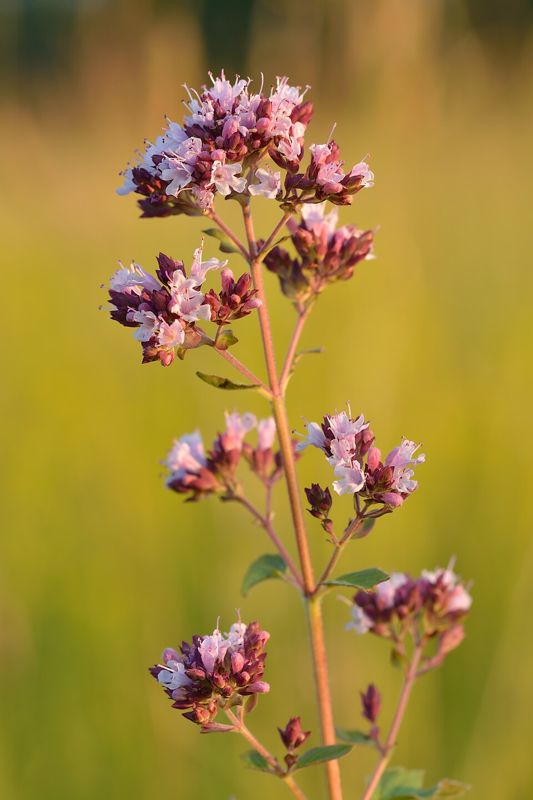
 Ivar Leidus / CC BY-SA 3.0 · Source
Oregano
Origanum vulgare
Overview
The essential herb of Mediterranean, Mexican, and Greek cuisine, oregano's warm, pungent flavor intensifies when dried — one of few herbs that is actually better dried than fresh. Its essential oil (carvacrol and thymol) has some of the strongest antimicrobial activity of any culinary herb. Greek oregano is the most pungent, while Mexican oregano (a different species) has a citrusy edge suited to Latin dishes.
Mentioned in The Mycelial Grimoire
Posts on the Grimoire that reference Oregano.
Growing Conditions
How to Grow Oregano
Oregano (Origanum vulgare) is a perennial forb/herb that grows to about 1.5 feet tall and 1.5 feet wide.
To grow oregano, give it full sun. It is hardy across USDA hardiness zones 4–9. Plant it in well-drained, lean, sandy or rocky soil; drought-tolerant, at a near-neutral pH of 6–8. It does best with even, moderate watering.
Exact sowing, transplanting, and harvest months shift by climate zone — the planting calendar below lays them out for cool through hot regions. Its flowers appear from May through August, offering high value to pollinators. Settle it in its first year, and drought becomes its problem to solve, not yours.
Companion Planting & Soil
Oregano grows well alongside tomato, pepper, basil, cabbage, and grape.
Good Companions
Planting Calendar
When to sow, transplant, and harvest by growing zone.
| Zone | Action | Months | Notes |
|---|---|---|---|
| Cold (1-2) | Transplant | Jun — Jun | Plant after last frost; perennial to zone 5 |
| Cold (1-2) | Harvest | Jun — Sep | Harvest before flowers open for best flavor |
| Cool (3-4) | Transplant | May — May | Plant after last frost |
| Cool (3-4) | Harvest | May — Oct | Harvest before flowers open |
| Moderate (5-7) | Transplant | Apr — May | Plant in spring |
| Moderate (5-7) | Harvest | Apr — Nov | Harvest as needed |
| Moderate (5-7) | Divide | Mar — Apr | Divide every 3-4 years |
| Warm (8-9) | Transplant | Mar — Apr | Plant in early spring |
| Warm (8-9) | Harvest | Mar — Nov | Harvest as needed |
| Hot (10+) | Transplant | Feb — Mar | Plant in late winter |
| Hot (10+) | Harvest | Jan — Dec | Harvest year-round |
Uses
In the Kitchen
In the kitchen, oregano turns up in more than one form: essential in pizza sauce, pasta, and Greek salads; dried for Mediterranean and Mexican spice blends; fresh in marinades, dressings, and compound butters.
Medicinal & Folk Use
In herbal and folk tradition, it has been valued in several ways: oil of oregano has broad-spectrum antimicrobial activity; traditional remedy for respiratory infections and coughs; antioxidant-rich herb with anti-inflammatory properties. These are traditional uses, not medical advice.
Beyond the Garden
Oregano earns its keep past the plate, too: drought-tolerant ground cover for herb gardens and rock gardens; attracts beneficial pollinators including bees and butterflies.
Safety Notes
Culinary use is safe. Oregano essential oil is extremely concentrated — do not take it internally or use it undiluted on skin, and avoid medicinal doses in pregnancy.
The Field Library
Books from the Futurespore shelf that go deeper on plants like this one.
- Medicinal Herbs: A Beginner's Guide the friendliest on-ramp to growing and using healing herbs at home
- Northeast Foraging region-tuned wild food guidance with clear lookalike warnings
- Braiding Sweetgrass reframes growing and gathering as a relationship of reciprocity
These are Bookshop.org affiliate links — they support independent bookstores and earn Futurespore a small commission at no extra cost to you. Browse the full Futurespore Bookshelf.