Lemongrass
Cymbopogon citratus
Overview
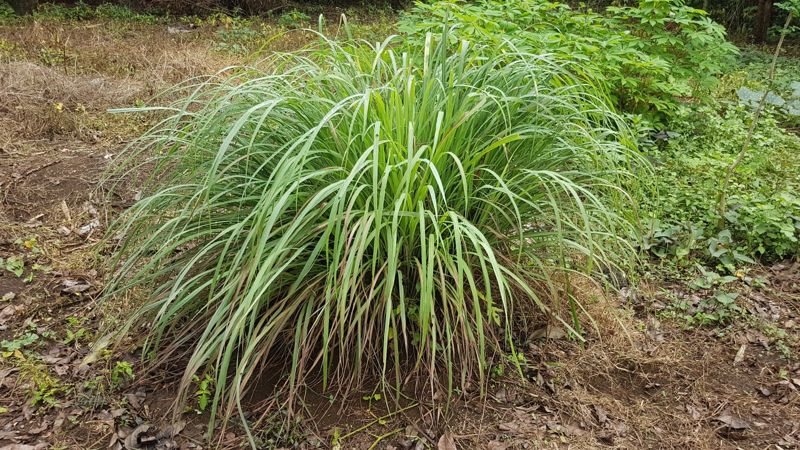
A tropical grass whose thick, citrusy stalks are essential to Thai, Vietnamese, and Indonesian cuisine. Lemongrass contains citral, the same compound in lemon peel, giving it that distinctive bright, clean flavor. Though tropical, it grows vigorously as an annual in temperate gardens and makes an attractive ornamental grass while providing a continuous harvest of aromatic stalks.
Growing Conditions
How to Grow Lemongrass
Lemongrass (Cymbopogon citratus) is a perennial graminoid that grows to about 4 feet tall and 2.5 feet wide.
To grow lemongrass, give it full sun. It is hardy across USDA hardiness zones 9–11. Plant it in rich, moist, well-drained soil with plenty of organic matter, at a slightly acidic pH of 5.5–7. It does best with even, moderate watering.
Exact sowing, transplanting, and harvest months shift by climate zone — the planting calendar below lays them out for cool through hot regions. Its flowers appear from June through August. Once its roots take hold, it asks little of you.
Companion Planting & Soil
Lemongrass grows well alongside ginger, turmeric, basil, and pepper.
Good Companions
Planting Calendar
When to sow, transplant, and harvest by growing zone.
| Zone | Action | Months | Notes |
|---|---|---|---|
| Cold (1-2) | Start Indoors | Feb — Mar | Start indoors from stalks in water; grow as annual north of zone 9 |
| Cold (1-2) | Transplant | Jun — Jun | Transplant after all frost danger; grow in containers to overwinter indoors |
| Cold (1-2) | Harvest | Jul — Sep | Harvest outer stalks when 12"+ tall; use lower 3-4" of stalk |
| Cool (3-4) | Transplant | May — Jun | Transplant after last frost; grow in pots to bring inside |
| Cool (3-4) | Harvest | Jun — Oct | Twist and pull outer stalks; trim to white base |
| Moderate (5-7) | Transplant | Apr — May | Transplant when nights stay above 50°F; annual in zones 5-7 |
| Moderate (5-7) | Harvest | May — Oct | Harvest outer stalks as needed |
| Moderate (5-7) | Divide | Apr — May | Divide clumps in spring; each division needs a bulbous base |
| Warm (8-9) | Transplant | Mar — Apr | Transplant in spring; perennial in zones 8-9 with mulch |
| Warm (8-9) | Harvest | Apr — Nov | Harvest throughout growing season |
| Warm (8-9) | Divide | Mar — Apr | Divide established clumps in early spring |
| Hot (10+) | Transplant | Feb — Mar | Plant in spring; evergreen perennial in zone 10+ |
| Hot (10+) | Harvest | Jan — Dec | Harvest year-round from established clumps |
Uses
In the Kitchen
In the kitchen, lemongrass turns up in more than one form: essential in Thai soups (tom yum, tom kha); stalk base sliced for curries and stir-fries; brewed as a refreshing herbal tea.
Medicinal & Folk Use
In herbal and folk tradition, it has been valued in several ways: citral has antimicrobial and antifungal properties; traditional digestive and fever-reducing tea; essential oil used as a natural insect repellent. These are traditional uses, not medical advice.
Beyond the Garden
Lemongrass earns its keep past the plate, too: ornamental grass with lemony fragrance when brushed; natural mosquito repellent when planted near seating areas.
Safety Notes
Leaf edges are sharp and can cut skin. Essential oil may irritate sensitive skin.
The Field Library
Books from the Futurespore shelf that go deeper on plants like this one.
- Medicinal Herbs: A Beginner's Guide the friendliest on-ramp to growing and using healing herbs at home
- Edible Wild Plants a photographic guide organized by season — good for checking an ID twice in the field
- The Resilient Gardener growing staple food through drought, flood, and hard seasons
These are Bookshop.org affiliate links — they support independent bookstores and earn Futurespore a small commission at no extra cost to you. Browse the full Futurespore Bookshelf.