Cherry
Prunus avium
Overview
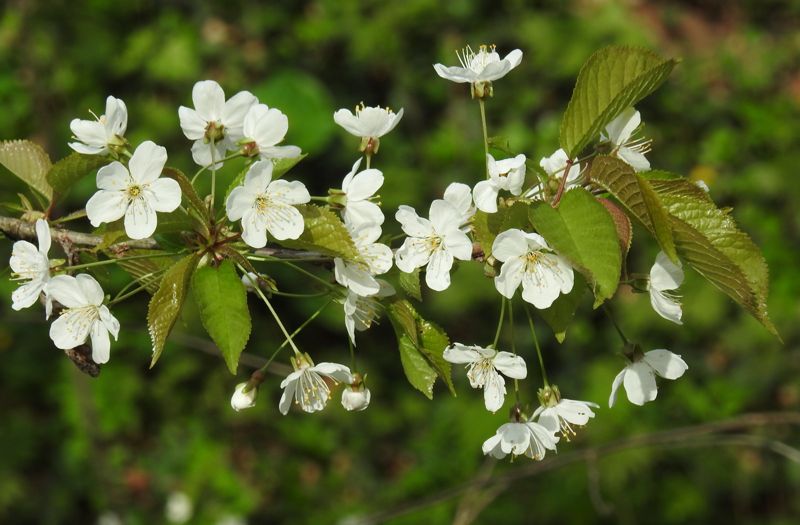
Cherry trees are among the most beautiful and productive fruit trees, with stunning spring blossoms that have inspired art and festivals for centuries. Sweet cherries are eaten fresh while sour cherries excel in pies, preserves, and drying. Most sweet cherry varieties need a compatible pollinator, while sour cherries are often self-fertile — an important consideration for small gardens.
How to Grow Cherry
Plant it in deep, well-drained, fertile loam, at a slightly acidic pH of 6–7.5.
In practice, plant out cherry April to May in cool zones and February to March in moderate zones. Harvest comes June to July in moderate zones. It keeps its own chemistry; read the safety notes before any part reaches a plate.
Companion Planting & Soil
Cherry grows well alongside chive, nasturtium, marigold, garlic, and comfrey — but keep it clear of walnut and grass.
Good Companions
Avoid Planting Near
Planting Calendar
When to sow, transplant, and harvest by growing zone.
| Zone | Action | Months | Notes |
|---|---|---|---|
| Cool (3-4) | Transplant | Apr — May | Plant bare-root in spring; sweet cherries need a pollinator |
| Moderate (5-7) | Transplant | Feb — Mar | Plant in late winter; sour cherries are self-fertile |
| Moderate (5-7) | Harvest | Jun — Jul | Pick when fully colored; taste-test for sweetness |
| Moderate (5-7) | Prune | Jan — Feb | Minimal pruning; remove dead/crossing branches |
Uses
In the Kitchen
In the kitchen, cherry turns up in more than one form: fresh eating, pies, jams, and compotes; dried as a snack or baking ingredient; fermented into cherry wine, kirsch, or maraschino liqueur.
Medicinal & Folk Use
In herbal and folk tradition, it has been valued in several ways: tart cherries rich in melatonin for sleep support; anti-inflammatory anthocyanins for joint pain relief; high in antioxidants and vitamin C. These are traditional uses, not medical advice.
Beyond the Garden
Cherry earns its keep past the plate, too: spring blossoms are ornamental showstoppers; cherry wood valued for woodworking and smoking.
Safety Notes
Cherry pits, leaves and wilted foliage contain cyanogenic glycosides. Swallowing a pit whole passes harmlessly, but never chew or blend pits — unpitted cherries in a smoothie is exactly the mistake. Keep prunings away from livestock.
The Field Library
Books from the Futurespore shelf that go deeper on plants like this one.
- Edible Wild Plants a photographic guide organized by season — good for checking an ID twice in the field
- The Resilient Gardener growing staple food through drought, flood, and hard seasons
These are Bookshop.org affiliate links — they support independent bookstores and earn Futurespore a small commission at no extra cost to you. Browse the full Futurespore Bookshelf.