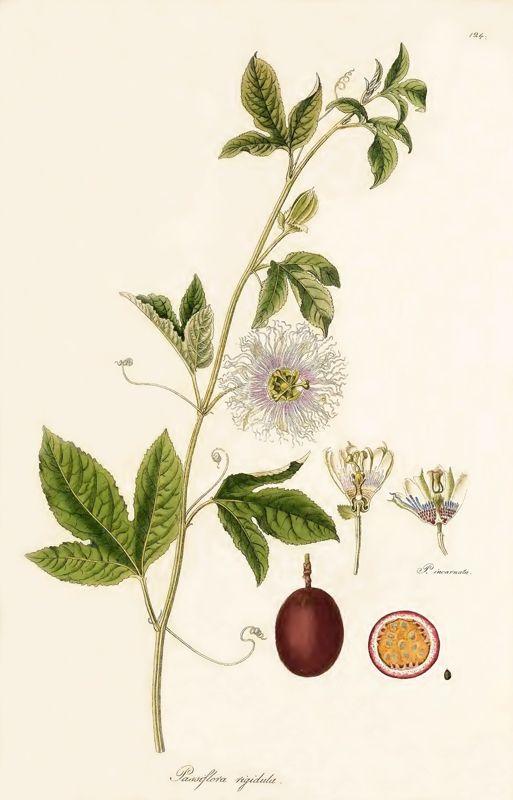
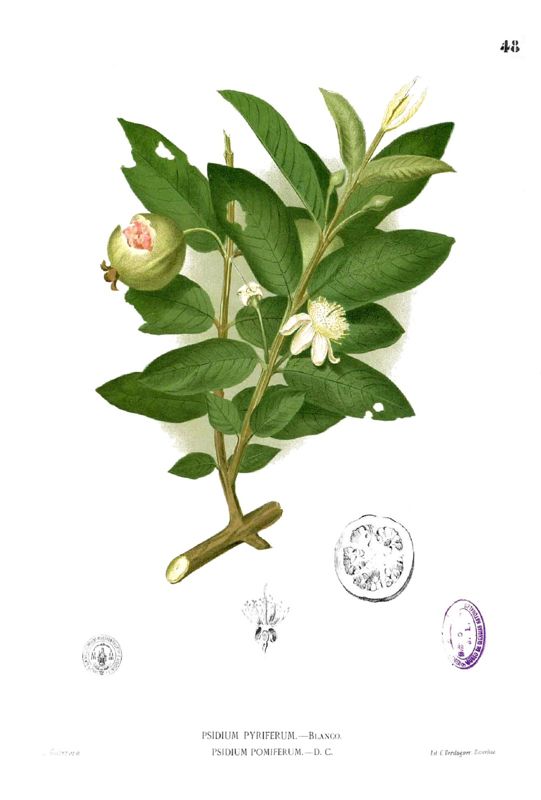
 Francisco Manuel Blanco (O.S.A.) / Public domain · Source
Guava
Psidium guajava
Overview
A tropical fruit tree that produces intensely aromatic, sweet-tart fruits packed with more vitamin C than almost any other fruit. Guavas come in varieties with white, pink, or red flesh, each with distinct flavor profiles. They are remarkably productive, often fruiting within 2-3 years from seed, and some cold-hardy varieties can tolerate brief freezes.
Growing Conditions
How to Grow Guava
Guava (Psidium guajava) is a tree that grows to about 25 feet tall and 33 feet wide.
To grow guava, give it full sun. It is hardy across USDA hardiness zones 10b–12. Plant it in well-drained, fertile loam; adaptable to many soils, at a slightly acidic pH of 5–7. It does best with even, moderate watering.
In practice, plant out guava March to May in warm zones and February to April in hot zones. Harvest comes August to November in warm zones and June to December in hot zones. Its white flowers appear from March through May, offering high value to pollinators. Give it a season to establish, and it carries itself through the dry stretches.
Companion Planting & Soil
Guava grows well alongside comfrey, banana, chive, and marigold.
Good Companions
Planting Calendar
When to sow, transplant, and harvest by growing zone.
| Zone | Action | Months | Notes |
|---|---|---|---|
| Warm (8-9) | Transplant | Mar — May | Plant in spring; tolerates brief frost to 28°F once established; full sun |
| Warm (8-9) | Harvest | Aug — Nov | Harvest when fruit yields to gentle pressure and is fragrant; ripens off tree |
| Warm (8-9) | Prune | Feb — Mar | Prune to open center for airflow; remove suckers; can be kept as large shrub |
| Hot (10+) | Transplant | Feb — Apr | Plant in spring; fast-growing tropical tree; fruits within 2-4 years from seed |
| Hot (10+) | Harvest | Jun — Dec | Extended harvest; may fruit twice per year in ideal tropical conditions |
Uses
In the Kitchen
In the kitchen, guava turns up in more than one form: fresh eating when fully ripe; guava paste (goiabada) served with cheese in Latin America; juiced, made into jam, or used in tropical desserts.
Medicinal & Folk Use
In herbal and folk tradition, it has been valued in several ways: exceptionally high in vitamin C — up to 4x oranges; leaf tea traditionally used for diarrhea and digestive issues; rich in lycopene (pink varieties) for antioxidant support. These are traditional uses, not medical advice.
Beyond the Garden
Guava earns its keep past the plate, too: compact fruit tree suitable for containers in cold climates; fragrant flowers attract pollinators.
The Field Library
Books from the Futurespore shelf that go deeper on plants like this one.
- The Modern Herbal Dispensatory a working reference for tinctures, salves, and doses once you get serious
- Northeast Foraging region-tuned wild food guidance with clear lookalike warnings
- Braiding Sweetgrass reframes growing and gathering as a relationship of reciprocity
These are Bookshop.org affiliate links — they support independent bookstores and earn Futurespore a small commission at no extra cost to you. Browse the full Futurespore Bookshelf.