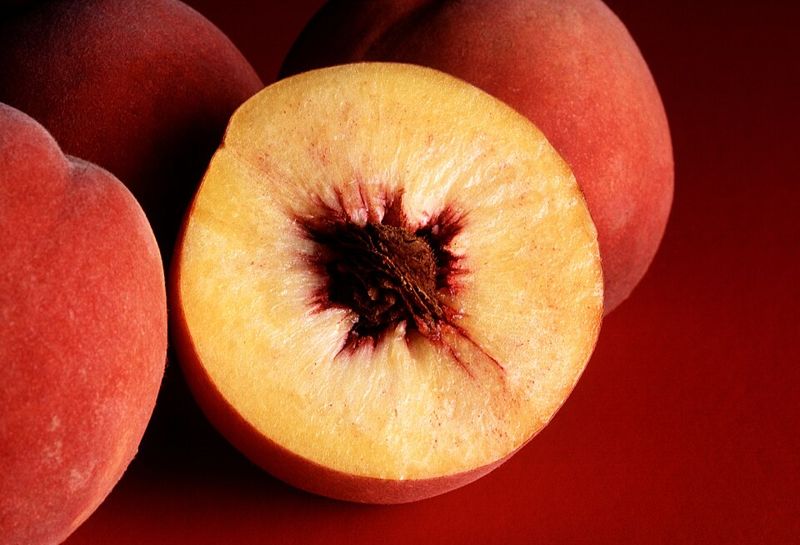
 Jack Dykinga, USDA / Public domain · Source
Peach
Prunus persica
Overview
A stone fruit of Chinese origin that has been cultivated for over 4,000 years, peaches remain one of the most beloved summer fruits worldwide. The intoxicating fragrance and juicy sweetness of a tree-ripened peach is incomparable to anything from a grocery store. Peaches are classified as freestone (pit separates easily) or clingstone (flesh clings to pit), each with different culinary strengths.
Growing Conditions
How to Grow Peach
Peach (Prunus persica) is an annual tree that grows to about 30 feet tall and 20 feet wide.
To grow peach, give it full sun. It is hardy across USDA hardiness zones 5–8. Plant it in well-drained, moderately fertile, sandy loam, at a slightly acidic pH of 6–7. It does best with even, moderate watering.
In practice, plant out peach February to March in moderate zones and January to February in warm zones. Harvest comes June to August in moderate zones. Its pink flowers appear from April through June, offering high value to pollinators. Let a few flowers go by unpicked; the bees will thank you, and so will next season.
Companion Planting & Soil
Peach grows well alongside garlic, chive, nasturtium, tansy, and comfrey — but keep it clear of walnut, tomato, and potato.
Good Companions
Avoid Planting Near
Planting Calendar
When to sow, transplant, and harvest by growing zone.
| Zone | Action | Months | Notes |
|---|---|---|---|
| Moderate (5-7) | Transplant | Feb — Mar | Plant bare-root; needs 600-1000 chill hours |
| Moderate (5-7) | Harvest | Jun — Aug | Harvest when fruit yields to gentle pressure and smells fragrant |
| Moderate (5-7) | Prune | Feb — Mar | Prune to open vase shape; thin fruit to 6-8 inch spacing |
| Warm (8-9) | Transplant | Jan — Feb | Choose low-chill varieties (200-400 hours) |
Uses
In the Kitchen
In the kitchen, peach turns up in more than one form: fresh eating at peak ripeness — the ultimate summer fruit; cobbler, pie, jam, and preserves; grilled with honey and ice cream.
Medicinal & Folk Use
In herbal and folk tradition, it has been valued in several ways: rich in vitamins A and C; phenolic compounds support anti-inflammatory activity; fiber supports digestive health. These are traditional uses, not medical advice.
Beyond the Garden
Peach earns its keep past the plate, too: beautiful ornamental spring blossoms; dwarf varieties suited to container growing.
Safety Notes
The kernel inside the pit contains amygdalin, which releases cyanide — do not eat peach kernels or blend whole pits. The fruit itself is entirely safe. Keep wilted peach prunings away from livestock.
The Field Library
Books from the Futurespore shelf that go deeper on plants like this one.
- Medicinal Herbs: A Beginner's Guide the friendliest on-ramp to growing and using healing herbs at home
- Northeast Foraging region-tuned wild food guidance with clear lookalike warnings
- Braiding Sweetgrass reframes growing and gathering as a relationship of reciprocity
These are Bookshop.org affiliate links — they support independent bookstores and earn Futurespore a small commission at no extra cost to you. Browse the full Futurespore Bookshelf.