Cucumber
Cucumis sativus
Overview
Refreshing summer vegetable that thrives in warm, consistently moist conditions. Trellising saves space, produces straighter fruit, and reduces disease. Types include slicing (long, smooth), pickling (short, bumpy), and burpless (English-style). Erratic watering causes bitterness and misshapen fruit.
Mentioned in The Mycelial Grimoire
Posts on the Grimoire that reference Cucumber.
Growing Conditions
How to Grow Cucumber
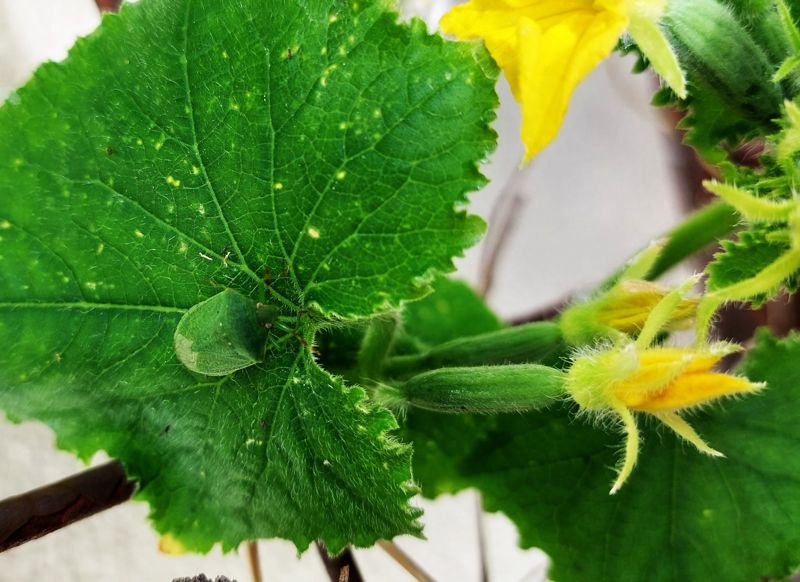
Cucumber (Cucumis sativus) is a vining annual that grows to about 7 feet tall and 3 feet wide.
To grow cucumber, give it full sun. It is hardy across USDA hardiness zones 4–11. Plant it in rich, deep loam with high organic matter; consistent moisture, at a slightly acidic pH of 6–7. It does best with consistently moist to wet soil.
Exact sowing, transplanting, and harvest months shift by climate zone — the planting calendar below lays them out for cool through hot regions. Its yellow flowers appear from June through August, offering moderate value to pollinators. One season is all it asks — sow it, tend it, and let it go.
Companion Planting & Soil
Cucumber grows well alongside beans, corn, peas, sunflower, radish, and nasturtium — but keep it clear of potato, sage, and aromatic herbs.
Good Companions
Avoid Planting Near
Planting Calendar
When to sow, transplant, and harvest by growing zone.
| Zone | Action | Months | Notes |
|---|---|---|---|
| Cold (1-2) | Start Indoors | May — May | Start 3-4 weeks before transplant; dislikes root disturbance — use peat pots |
| Cold (1-2) | Transplant | Jun — Jun | Wait until soil is 65°F+; row covers help in cool springs |
| Cold (1-2) | Harvest | Jul — Sep | Pick young (4-8 inches) for best flavor; daily picking extends production |
| Cool (3-4) | Direct Sow | May — Jun | Direct sow when soil is warm; trellis to save space |
| Cool (3-4) | Harvest | Jul — Sep | Harvest every 2-3 days; oversized cucumbers shut down production |
| Moderate (5-7) | Direct Sow | Apr — Jun | Succession plant every 3 weeks for continuous harvest |
| Moderate (5-7) | Harvest | Jun — Oct | Pick when slim and firm; bitter taste means stress (heat or dry) |
| Warm (8-9) | Direct Sow | Mar — May | Spring crop; consider fall crop too |
| Warm (8-9) | Direct Sow | Aug — Sep | Fall crop avoids peak heat |
| Warm (8-9) | Harvest | May — Nov | Long season; refresh with second planting |
| Hot (10+) | Direct Sow | Feb — Mar | Spring crop; provide afternoon shade in summer |
| Hot (10+) | Direct Sow | Sep — Oct | Fall crop in late summer |
| Hot (10+) | Harvest | Apr — Jun | Spring crop |
| Hot (10+) | Harvest | Nov — Dec | Fall crop |
Uses
In the Kitchen
In the kitchen, cucumber turns up in more than one form: fresh in salads, sandwiches, tzatziki, and gazpacho; pickled — fermented or quick brine; cucumber-mint water for summer refreshment.
Medicinal & Folk Use
In herbal and folk tradition: cooling and hydrating; traditional remedy for puffy eyes. These are traditional uses, not medical advice.
Beyond the Garden
Cucumber earns its keep past the plate, too: trellis vertically to save 75% of garden space.
The Field Library
Books from the Futurespore shelf that go deeper on plants like this one.
- The Forager's Harvest identification, harvest windows, and preparation from someone who eats what he teaches
- Gaia's Garden home-scale permaculture — guilds, food forests, and beds that tend themselves
These are Bookshop.org affiliate links — they support independent bookstores and earn Futurespore a small commission at no extra cost to you. Browse the full Futurespore Bookshelf.