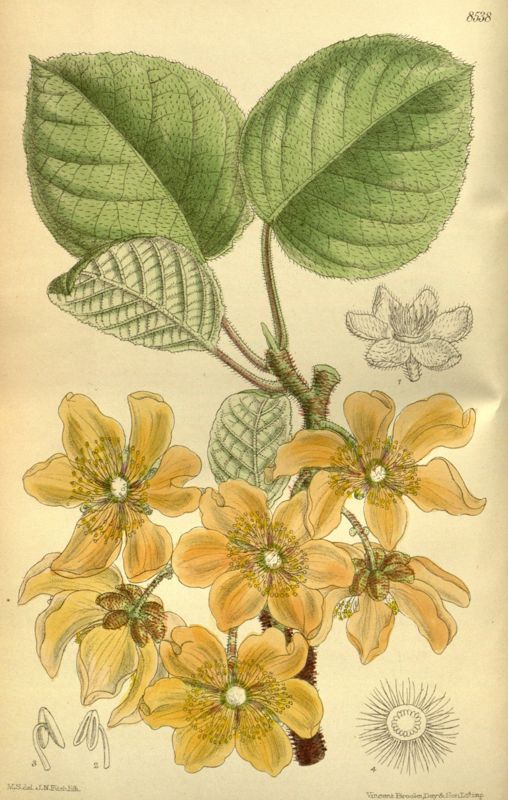
 M.S. del., J.N.Fitch lith. / Public domain · Source
Kiwi
Actinidia chinensis
Overview
The fuzzy brown kiwifruit and its smooth-skinned hardy cousin are vigorous vines that produce uniquely flavored, vitamin C-rich fruits. Hardy kiwi (Actinidia arguta) is grape-sized and can be grown in climates as cold as zone 4, while standard kiwi needs milder conditions. Most kiwi varieties require both a male and female vine for pollination, and they need sturdy support — a mature vine can weigh hundreds of pounds.
Growing Conditions
How to Grow Kiwi
Kiwi (Actinidia chinensis) is a vine that grows to about 25 feet tall and 10 feet wide.
To grow kiwi, give it partial sun to partial shade. It is hardy across USDA hardiness zones 6–9. Plant it in rich, well-drained, slightly acidic soil, at a slightly acidic pH of 5–6.5. It does best with even, moderate watering.
Exact sowing, transplanting, and harvest months shift by climate zone — the planting calendar below lays them out for cool through hot regions. It feeds two tables at once: yours and the pollinators’.
Companion Planting & Soil
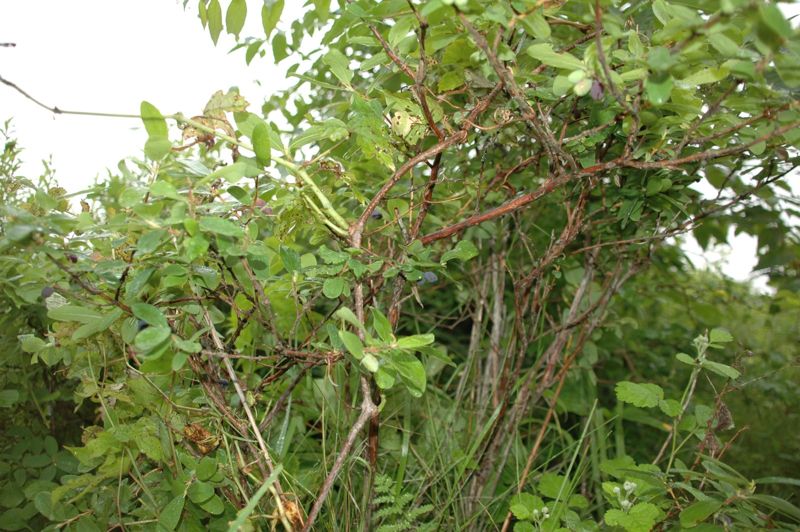
Kiwi grows well alongside comfrey, grape, and blueberry.
Good Companions
Planting Calendar
When to sow, transplant, and harvest by growing zone.
| Zone | Action | Months | Notes |
|---|---|---|---|
| Cold (1-2) | Transplant | May — May | Plant hardy kiwi (Actinidia arguta) in spring; needs male and female vine; zone 3+ |
| Cold (1-2) | Harvest | Sep — Oct | Hardy kiwi: harvest when slightly soft; ripen indoors if frost threatens |
| Cold (1-2) | Prune | Mar — Mar | Prune in late winter; remove fruited canes; thin to 6-8 buds per lateral |
| Cool (3-4) | Transplant | Apr — May | Plant hardy kiwi in spring; strong trellis required; fruits in 3-5 years |
| Cool (3-4) | Harvest | Sep — Oct | Pick when fruit gives to gentle pressure; or pick firm and ripen indoors |
| Cool (3-4) | Prune | Feb — Mar | Winter prune; vigorous grower — prune heavily |
| Moderate (5-7) | Transplant | Mar — Apr | Plant in spring; fuzzy kiwi (A. deliciosa) hardy to zone 7 |
| Moderate (5-7) | Harvest | Sep — Nov | Harvest before hard frost; fuzzy kiwi ripens Oct-Nov |
| Moderate (5-7) | Prune | Jan — Feb | Prune while dormant; also summer-prune vigorous shoots |
| Warm (8-9) | Transplant | Feb — Mar | Plant in late winter; fuzzy kiwi thrives in zones 7-9 |
| Warm (8-9) | Harvest | Oct — Dec | Harvest fuzzy kiwi in fall/early winter |
| Warm (8-9) | Prune | Dec — Jan (wraps) | Winter prune; summer tip back long shoots |
| Hot (10+) | Transplant | Jan — Feb | Plant in winter; needs protection from extreme heat |
| Hot (10+) | Harvest | Sep — Nov | Harvest when slightly soft; store in refrigerator |
Uses
In the Kitchen
In the kitchen, kiwi turns up in more than one form: fresh eating — peel and slice or eat hardy kiwi whole; added to fruit salads, smoothies, and desserts; made into jam, wine, and dried fruit.
Medicinal & Folk Use
In herbal and folk tradition, it has been valued in several ways: exceptionally high in vitamin C — more than oranges; contains actinidin enzyme that aids protein digestion; rich in vitamin K, potassium, and folate. These are traditional uses, not medical advice.
Beyond the Garden
Kiwi earns its keep past the plate, too: vigorous ornamental vine for arbors and pergolas; hardy kiwi offers cold-climate exotic fruit growing.
Safety Notes
A fairly common allergen (the actinidin enzyme), especially in children and people with latex allergy.
The Field Library
Books from the Futurespore shelf that go deeper on plants like this one.
- The Modern Herbal Dispensatory a working reference for tinctures, salves, and doses once you get serious
- Edible Wild Plants a photographic guide organized by season — good for checking an ID twice in the field
- The Resilient Gardener growing staple food through drought, flood, and hard seasons
These are Bookshop.org affiliate links — they support independent bookstores and earn Futurespore a small commission at no extra cost to you. Browse the full Futurespore Bookshelf.