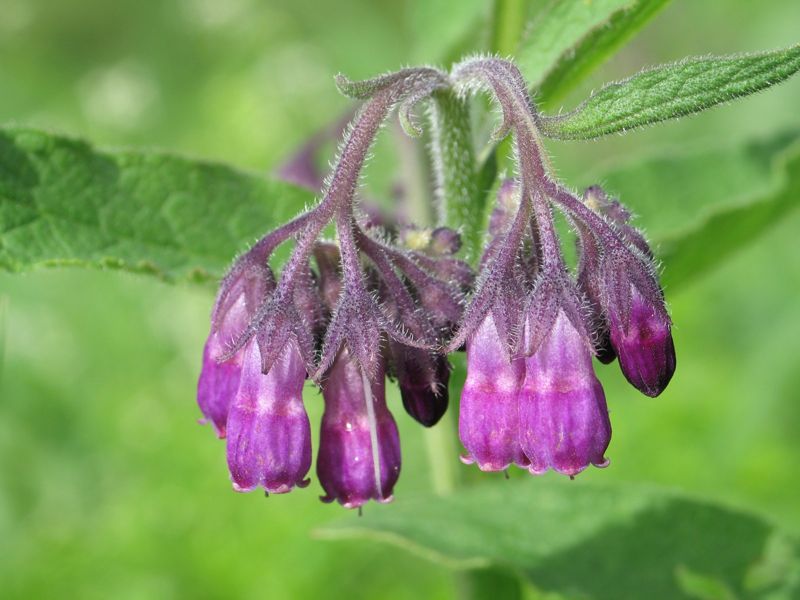
 Robert Flogaus-Faust / CC BY 4.0 · Source
Comfrey
Symphytum officinale
Overview
A vigorous perennial herb often called the permaculture plant because of its extraordinary usefulness in building soil fertility. Comfrey's deep taproots mine minerals from subsoil and concentrate them in large, fast-growing leaves that make nutrient-rich mulch, compost activator, and liquid fertilizer. While traditional internal use has been restricted due to pyrrolizidine alkaloids, external applications remain widely valued.
Growing Conditions
How to Grow Comfrey
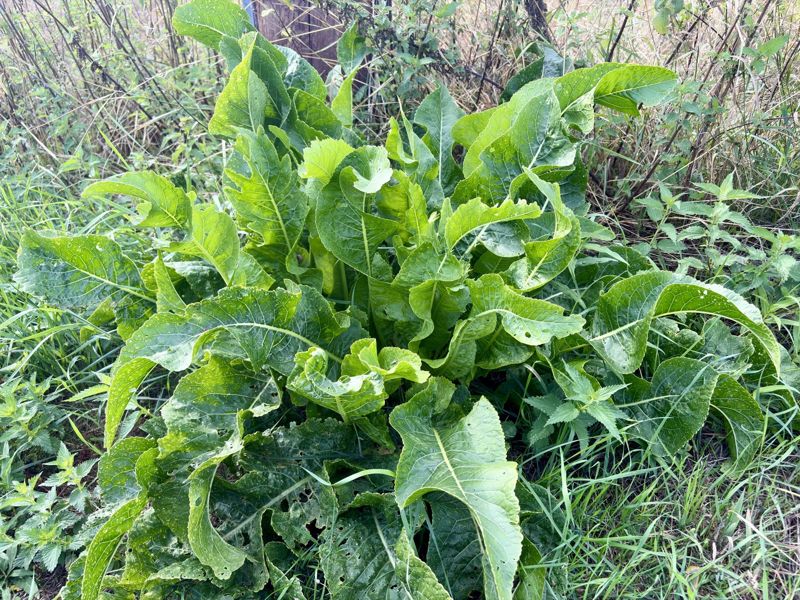
Comfrey (Symphytum officinale) is a forb/herb that grows to about 5 feet tall and 2 feet wide.
To grow comfrey, give it partial sun to partial shade. It is hardy across USDA hardiness zones 5–9. Plant it in deep, moist, fertile soil; extremely adaptable, at a slightly acidic pH of 6–7. It does best with even, moderate watering.
Exact sowing, transplanting, and harvest months shift by climate zone — the planting calendar below lays them out for cool through hot regions. Its flowers appear from May through August, offering high value to pollinators. A plant worth learning slowly, the way it has been used for generations.
Companion Planting & Soil
Comfrey grows well alongside apple, grape, raspberry, and fruit trees.
Good Companions
Planting Calendar
When to sow, transplant, and harvest by growing zone.
| Zone | Action | Months | Notes |
|---|---|---|---|
| Cold (1-2) | Transplant | May — Jun | Plant root cuttings or crowns in spring; Bocking 14 variety is sterile (non-invasive) |
| Cold (1-2) | Harvest | Jun — Aug | Cut leaves 2" above ground for compost activator or mulch; 2-3 cuts per year |
| Cool (3-4) | Transplant | Apr — May | Plant crowns in spring; deep taproot makes it nearly permanent |
| Cool (3-4) | Harvest | May — Sep | Cut for mulch/compost tea; regrows quickly; 3-4 cuts per year |
| Moderate (5-7) | Transplant | Mar — Apr | Plant in early spring; choose location carefully — very hard to remove |
| Moderate (5-7) | Harvest | Apr — Oct | Harvest leaves for mulch, compost tea, or liquid fertilizer |
| Moderate (5-7) | Divide | Mar — Apr | Divide crowns every 4-5 years; every root piece will grow |
| Warm (8-9) | Transplant | Feb — Mar | Plant in late winter/spring |
| Warm (8-9) | Harvest | Mar — Nov | Multiple harvests per season; nutrient accumulator |
| Hot (10+) | Transplant | Nov — Dec | Plant in fall; tolerates heat but prefers moisture |
| Hot (10+) | Harvest | Jan — Dec | Harvest year-round; keep watered |
Uses
Medicinal & Folk Use
In herbal and folk tradition, it has been valued in several ways: topical poultice for sprains, bruises, and bone healing (external only); infused oil used in salves for skin repair; traditional name 'knitbone' reflects use for fracture recovery. These are traditional uses, not medical advice.
Beyond the Garden
Comfrey earns its keep past the plate, too: dynamic nutrient accumulator — leaves used as mulch and compost activator; liquid fertilizer tea (comfrey tea) for potassium-hungry plants; living mulch under fruit trees in food forests.
Safety Notes
Do not eat comfrey or drink it as a tea. All Symphytum species contain pyrrolizidine alkaloids, which accumulate in the liver and can cause veno-occlusive disease; they are also carcinogenic. Roots are the most concentrated and older leaves carry more than young ones, but no part is considered safe to ingest. The US FDA advised against oral comfrey products in 2001 and several countries ban them. Traditional external use as a poultice or salve on unbroken skin is a separate question from eating it, and the plant remains excellent as mulch and compost.
The Field Library
Books from the Futurespore shelf that go deeper on plants like this one.
- Medicinal Herbs: A Beginner's Guide the friendliest on-ramp to growing and using healing herbs at home
- Gaia's Garden home-scale permaculture — guilds, food forests, and beds that tend themselves
These are Bookshop.org affiliate links — they support independent bookstores and earn Futurespore a small commission at no extra cost to you. Browse the full Futurespore Bookshelf.