Hazelnut
Corylus avellana
Overview
A multi-stemmed shrub or small tree that produces the rich, sweet nuts essential to Nutella, pralines, and fine chocolate. Hazelnuts (filberts) are among the easiest nut trees to grow, producing within 3-4 years of planting and reaching full production by year 8. They form a key layer in food forests and agroforestry systems, providing both food and wildlife habitat.
Growing Conditions
How to Grow Hazelnut
Hazelnut (Corylus avellana) is a tree that grows to about 10 feet tall and 16 feet wide.
To grow hazelnut, give it partial sun to partial shade. It is hardy across USDA hardiness zones 4–8. Plant it in well-drained, loamy soil; tolerates clay, at a slightly acidic pH of 5.5–7.5. It does best with even, moderate watering.
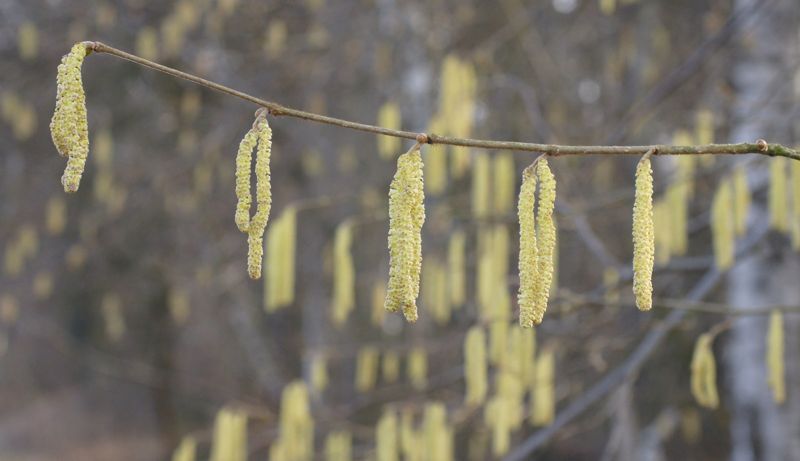
Exact sowing, transplanting, and harvest months shift by climate zone — the planting calendar below lays them out for cool through hot regions. Its flowers appear from February through March. Old knowledge lives in this one; grow it, and you keep a little of that alive.
Companion Planting & Soil
Hazelnut grows well alongside comfrey, currant, gooseberry, and clover.
Good Companions
Planting Calendar
When to sow, transplant, and harvest by growing zone.
| Zone | Action | Months | Notes |
|---|---|---|---|
| Cold (1-2) | Transplant | Apr — May | Plant bare-root in spring; needs 2+ varieties for pollination; hardy to zone 3 |
| Cold (1-2) | Harvest | Sep — Oct | Harvest when husks turn brown and nuts fall; dry in single layer 2-4 weeks |
| Cold (1-2) | Prune | Feb — Mar | Prune in late winter; remove suckers unless growing as hedge |
| Cool (3-4) | Transplant | Mar — Apr | Plant bare-root in spring; space 15-20 feet for trees, 4-6 feet for hedge |
| Cool (3-4) | Harvest | Sep — Oct | Gather fallen nuts daily; cure in dry area with good airflow |
| Cool (3-4) | Prune | Jan — Feb | Prune while dormant; open center for light |
| Moderate (5-7) | Transplant | Nov — Dec | Plant in late fall while dormant; or early spring |
| Moderate (5-7) | Transplant | Feb — Mar | Spring planting alternative |
| Moderate (5-7) | Harvest | Aug — Oct | Harvest when husks open; shake tree or collect from ground |
| Moderate (5-7) | Prune | Dec — Jan (wraps) | Prune during dormancy; wind-pollinated — do not prune catkins |
| Warm (8-9) | Transplant | Nov — Dec | Plant during dormancy; needs some winter chill |
| Warm (8-9) | Harvest | Aug — Sep | Harvest in late summer/early fall |
Uses
In the Kitchen
In the kitchen, hazelnut turns up in more than one form: eaten raw, roasted, or as hazelnut butter; essential in pralines, Nutella, and fine chocolates; oil pressed for high-end culinary use.
Medicinal & Folk Use
In herbal and folk tradition, it has been valued in several ways: rich in vitamin E and healthy monounsaturated fats; manganese and copper support bone and connective tissue health; proanthocyanidins in skin support cardiovascular health. These are traditional uses, not medical advice.
Beyond the Garden
Hazelnut earns its keep past the plate, too: coppicing for poles, stakes, and wattle fencing; wildlife food for squirrels, jays, and woodpeckers; windbreak and hedge in agroforestry systems.
The Field Library
Books from the Futurespore shelf that go deeper on plants like this one.
- Medicinal Herbs: A Beginner's Guide the friendliest on-ramp to growing and using healing herbs at home
- Northeast Foraging region-tuned wild food guidance with clear lookalike warnings
- Braiding Sweetgrass reframes growing and gathering as a relationship of reciprocity
These are Bookshop.org affiliate links — they support independent bookstores and earn Futurespore a small commission at no extra cost to you. Browse the full Futurespore Bookshelf.