Mayapple
Podophyllum peltatum
Overview
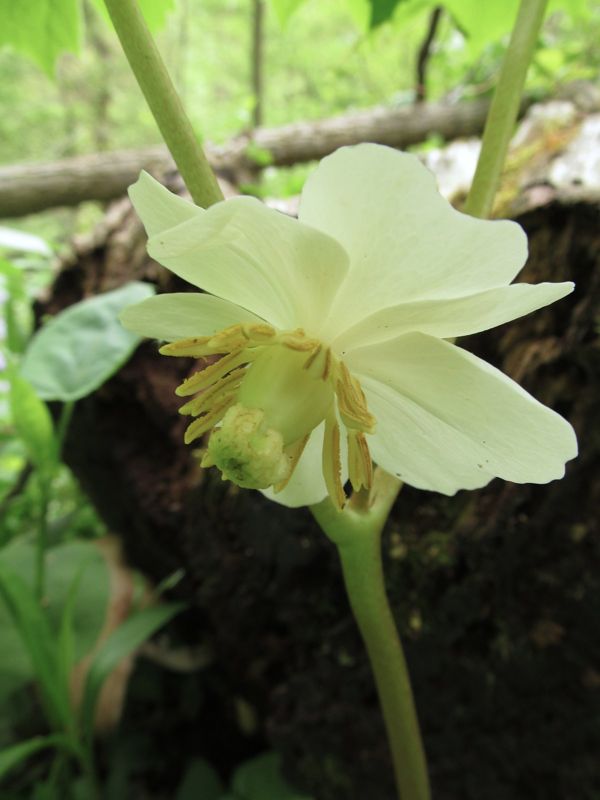
A fascinating native woodland plant that forms colonial umbrella-like canopies across the forest floor in spring. Only forked stems produce the single waxy white flower hidden beneath the leaves, which develops into a small, lemon-flavored fruit edible only when fully ripe and yellow. The rest of the plant is toxic, but it is the source of etoposide, a critical chemotherapy drug.
Growing Conditions
How to Grow Mayapple
Mayapple (Podophyllum peltatum) is a forb/herb that grows to about 12 inches tall and 12 inches wide.
To grow mayapple, give it shade or dappled light. It is hardy across USDA hardiness zones 7–11. Plant it in rich, moist, humusy woodland soil, at a slightly acidic pH of 5–6.5. It does best with even, moderate watering.
Exact sowing, transplanting, and harvest months shift by climate zone — the planting calendar below lays them out for cool through hot regions. Its flowers appear from May through June, offering moderate value to pollinators. Come to it with patience — its value is the kind that rewards knowing.
Companion Planting & Soil
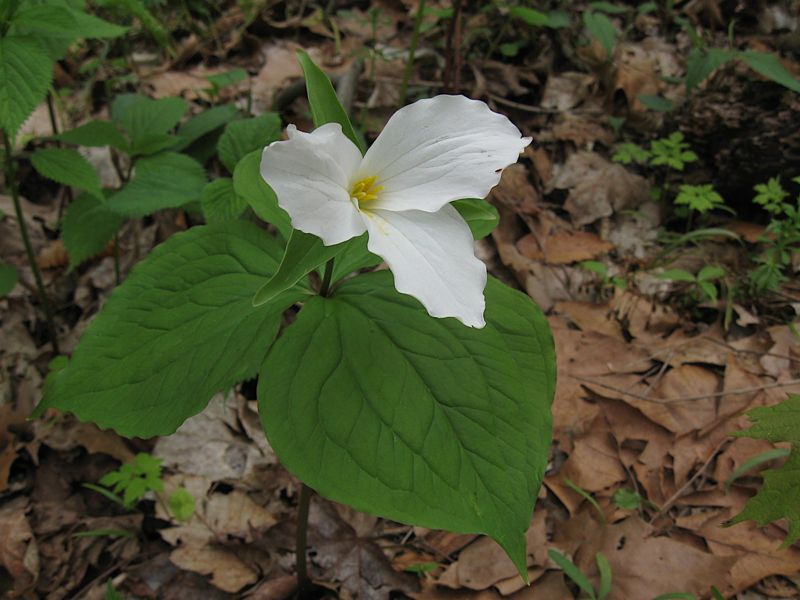
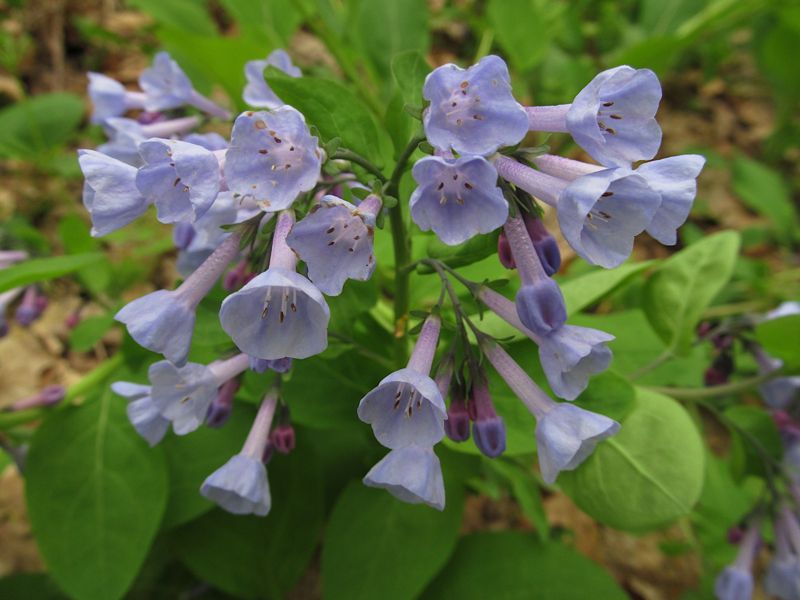
Mayapple grows well alongside trillium, jack-in-the-pulpit, fern, and virginia bluebells.
Good Companions
Planting Calendar
When to sow, transplant, and harvest by growing zone.
| Zone | Action | Months | Notes |
|---|---|---|---|
| Cold (1-2) | Transplant | Apr — May | Plant rhizomes in spring; native woodland ephemeral; forms large colonies |
| Cold (1-2) | Bloom | May — May | Single white flower under leaves; fruit edible ONLY when fully ripe and yellow; plant is otherwise toxic |
| Cool (3-4) | Transplant | Mar — Apr | Plant rhizomes 2" deep in moist shade; umbrella-like leaves |
| Cool (3-4) | Bloom | Apr — May | Spring bloom; small lemon-shaped fruit ripens in summer; all parts toxic except ripe fruit |
| Moderate (5-7) | Transplant | Mar — Apr | Plant in spring; single white flower hidden beneath paired leaves |
| Moderate (5-7) | Bloom | Apr — May | Spring bloom; woodland groundcover; goes dormant by July |
| Warm (8-9) | Transplant | Feb — Mar | Plant in late winter; deciduous — dormant by midsummer |
| Warm (8-9) | Bloom | Mar — Apr | Early spring; dormant by early summer |
Uses
In the Kitchen
In the kitchen: fully ripe (yellow) fruit only — eaten fresh or made into jam.
Medicinal & Folk Use
In herbal and folk tradition, it has been valued in several ways: the original botanical source of a modern chemotherapy drug (etoposide) — a laboratory story, not a home remedy; traditional Native American medicine for warts and skin growths (topical, professional use only). These are traditional uses, not medical advice.
Beyond the Garden
Mayapple earns its keep past the plate, too: dramatic native woodland ground cover; important species for pharmaceutical research.
Safety Notes
Everything except the fully ripe golden fruit is poisonous — root, stem, leaves and green unripe fruit all carry podophyllotoxin, and root preparations have caused deaths. Even ripe fruit only in moderation. The wart treatment derived from mayapple (podophyllin) is a prescription clinical procedure, not a home remedy.
The Field Library
Books from the Futurespore shelf that go deeper on plants like this one.
- Medicinal Herbs: A Beginner's Guide the friendliest on-ramp to growing and using healing herbs at home
- Edible Wild Plants a photographic guide organized by season — good for checking an ID twice in the field
- The Resilient Gardener growing staple food through drought, flood, and hard seasons
These are Bookshop.org affiliate links — they support independent bookstores and earn Futurespore a small commission at no extra cost to you. Browse the full Futurespore Bookshelf.