 User:SB_Johnny / CC BY-SA 3.0 · Source
Mountain mint
Pycnanthemum spp.
Overview
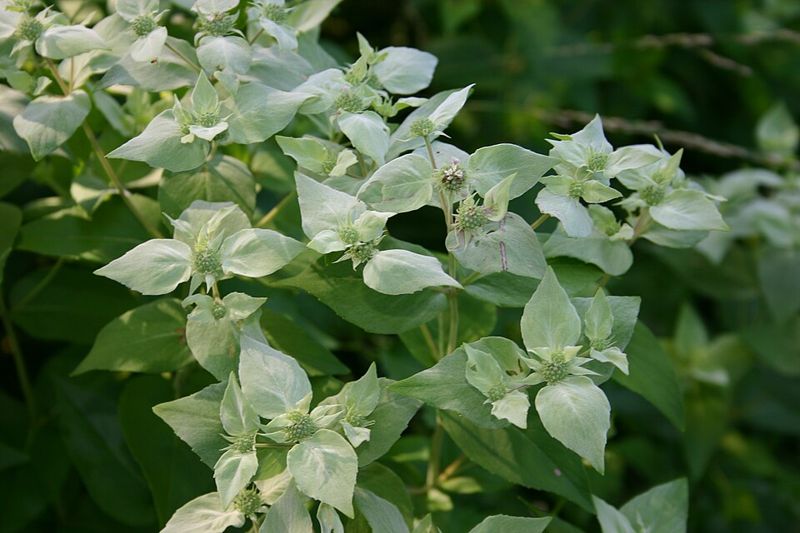
A native perennial herb with silvery-frosted leaves and clusters of tiny white flowers that attract an astonishing diversity of pollinators. Mountain mint is arguably the single best native plant for supporting beneficial insect populations, with studies showing it attracts more pollinator species than almost any other native. It has a pleasant mint-oregano flavor and makes excellent tea.
How to Grow Mountain mint
Plant it in average, well-drained soil; adaptable and drought-tolerant, at a slightly acidic pH of 5.5–7.
Exact sowing, transplanting, and harvest months shift by climate zone — the planting calendar below lays them out for cool through hot regions. Give it what it asks for here, and it will find its place in the garden.
Companion Planting & Soil
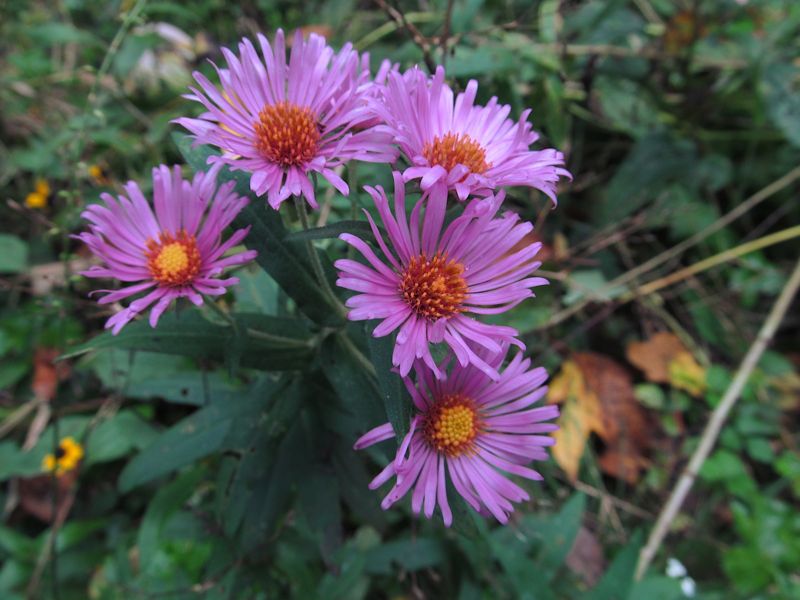
Mountain mint grows well alongside echinacea, goldenrod, bee balm, and aster.
Good Companions
Planting Calendar
When to sow, transplant, and harvest by growing zone.
| Zone | Action | Months | Notes |
|---|---|---|---|
| Cold (1-2) | Transplant | May — Jun | Plant in spring; native bee magnet; silvery bracts; perennial to zone 4 |
| Cold (1-2) | Bloom | Jul — Sep | White flowers with silvery bracts; incredibly attractive to native bees and wasps |
| Cool (3-4) | Transplant | Apr — May | Plant in spring; spreads moderately by rhizomes — easy to pull unwanted stems |
| Cool (3-4) | Bloom | Jun — Sep | Summer bloom; aromatic mint-scented foliage; makes excellent tea |
| Moderate (5-7) | Transplant | Mar — Apr | Plant in spring; hosts more pollinator species than almost any other native perennial |
| Moderate (5-7) | Bloom | Jun — Sep | Blooms midsummer through fall; top native pollinator plant |
| Moderate (5-7) | Divide | Mar — Apr | Divide clumps every 3-4 years in spring |
| Warm (8-9) | Transplant | Feb — Mar | Plant in late winter; tolerates a wide range of soil and moisture |
| Warm (8-9) | Bloom | May — Aug | Extended bloom; deer and rabbit resistant |
| Hot (10+) | Transplant | Nov — Dec | Plant in fall; part shade in hottest zones |
| Hot (10+) | Bloom | May — Jul | Summer bloom; drought tolerant |
Uses
In the Kitchen
In the kitchen, mountain mint turns up in more than one form: leaves and flowers brewed as a refreshing herbal tea; minty-oregano flavor for seasoning.
Medicinal & Folk Use
In herbal and folk tradition, it has been valued in several ways: traditional Native American remedy for fevers and headaches; cooling tea for digestive comfort. These are traditional uses, not medical advice.
Beyond the Garden
Mountain mint earns its keep past the plate, too: top-tier native pollinator plant — attracts extraordinary insect diversity; deer-resistant native perennial; rain garden and meadow restoration.
Safety Notes
Avoid medicinal quantities during pregnancy.
The Field Library
Books from the Futurespore shelf that go deeper on plants like this one.
- Northeast Foraging region-tuned wild food guidance with clear lookalike warnings
- Braiding Sweetgrass reframes growing and gathering as a relationship of reciprocity
These are Bookshop.org affiliate links — they support independent bookstores and earn Futurespore a small commission at no extra cost to you. Browse the full Futurespore Bookshelf.