White clover
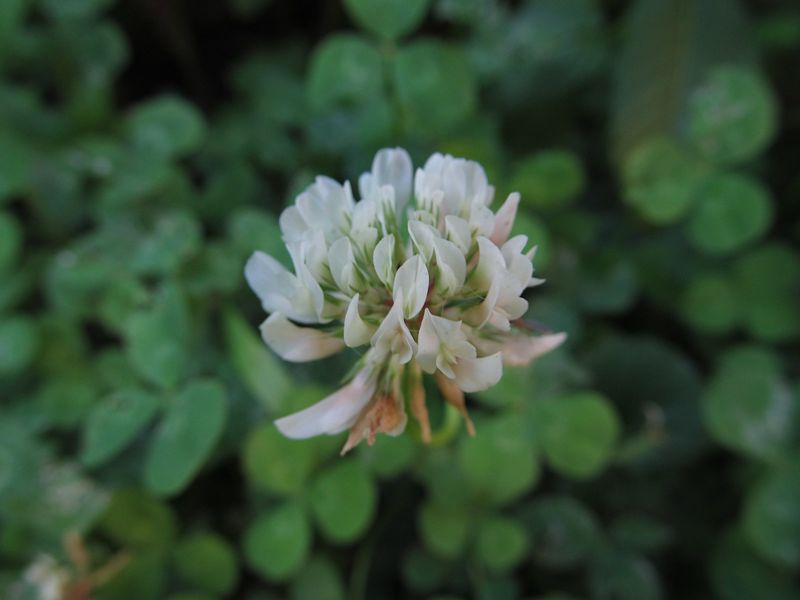
Trifolium repens
Overview
A humble but mighty ground cover that was once a standard component of every lawn mix before chemical herbicides made it an enemy. White clover fixes atmospheric nitrogen, feeds pollinators, stays green in drought, and creates a soft, living carpet that reduces the need for mowing and fertilizing. It is experiencing a well-deserved revival as the backbone of eco-friendly and pollinator-supporting lawns.
Growing Conditions
How to Grow White clover
White clover (Trifolium repens) is a perennial forb/herb that grows to about 2 feet tall and 1.5 feet wide.
To grow white clover, give it full sun, though it tolerates a little shade. It is hardy across USDA hardiness zones 9b–10. Plant it in adaptable to most soils; tolerates poor, compacted conditions, at a slightly acidic pH of 5.5–7.5. It does best with even, moderate watering.
Exact sowing, transplanting, and harvest months shift by climate zone — the planting calendar below lays them out for cool through hot regions. Its white flowers appear from May through June, offering high value to pollinators. Settle it in its first year, and drought becomes its problem to solve, not yours.
Companion Planting & Soil
White clover grows well alongside grass, fruit trees, cabbage, and corn.
Good Companions
Planting Calendar
When to sow, transplant, and harvest by growing zone.
| Zone | Action | Months | Notes |
|---|---|---|---|
| Cold (1-2) | Direct Sow | Apr — May | Direct sow in early spring; perennial living mulch; nitrogen fixer |
| Cold (1-2) | Bloom | Jun — Aug | White flowers attract bees; mow before flowering if clover is unwanted in lawn |
| Cool (3-4) | Direct Sow | Mar — May | Sow in spring; use as permanent living pathway or under-sow in orchards |
| Cool (3-4) | Bloom | May — Sep | Continuous low bloom; excellent bee forage; fixes 100+ lbs nitrogen per acre per year |
| Moderate (5-7) | Direct Sow | Mar — Apr | Sow in spring or early fall; Dutch white clover stays 4-8" tall |
| Moderate (5-7) | Direct Sow | Sep — Oct | Fall sow; perennial cover that persists for years |
| Moderate (5-7) | Bloom | Apr — Oct | Season-long bloom; living mulch in orchard and garden pathways |
| Warm (8-9) | Direct Sow | Sep — Oct | Fall sow; mow occasionally; tolerates foot traffic |
| Warm (8-9) | Bloom | Mar — May | Spring bloom; may go semi-dormant in summer |
| Hot (10+) | Direct Sow | Oct — Nov | Fall sow; may go dormant in extreme heat; recovers in fall |
| Hot (10+) | Bloom | Feb — Apr | Late winter/spring bloom; dormant in summer |
Uses
In the Kitchen
In the kitchen, white clover turns up in more than one form: flowers dried for mild herbal tea; young leaves added to salads; flowers dipped in batter and fried as fritters.
Medicinal & Folk Use
In herbal and folk tradition, it has been valued in several ways: flower tea traditionally used for coughs and colds; contains isoflavones similar to red clover; topical poultice for skin irritation. These are traditional uses, not medical advice.
Beyond the Garden
White clover earns its keep past the plate, too: nitrogen-fixing living mulch for lawns and orchards; premier ground cover for pollinator-friendly landscapes; green manure between crop rows.
Safety Notes
Flowers and young leaves are edible in small amounts. Primarily used as ground cover/nitrogen fixer. Can accumulate cyanogenic compounds in drought stress — avoid large quantities.
The Field Library
Books from the Futurespore shelf that go deeper on plants like this one.
- Medicinal Herbs: A Beginner's Guide the friendliest on-ramp to growing and using healing herbs at home
- The Forager's Harvest identification, harvest windows, and preparation from someone who eats what he teaches
- Gaia's Garden home-scale permaculture — guilds, food forests, and beds that tend themselves
These are Bookshop.org affiliate links — they support independent bookstores and earn Futurespore a small commission at no extra cost to you. Browse the full Futurespore Bookshelf.