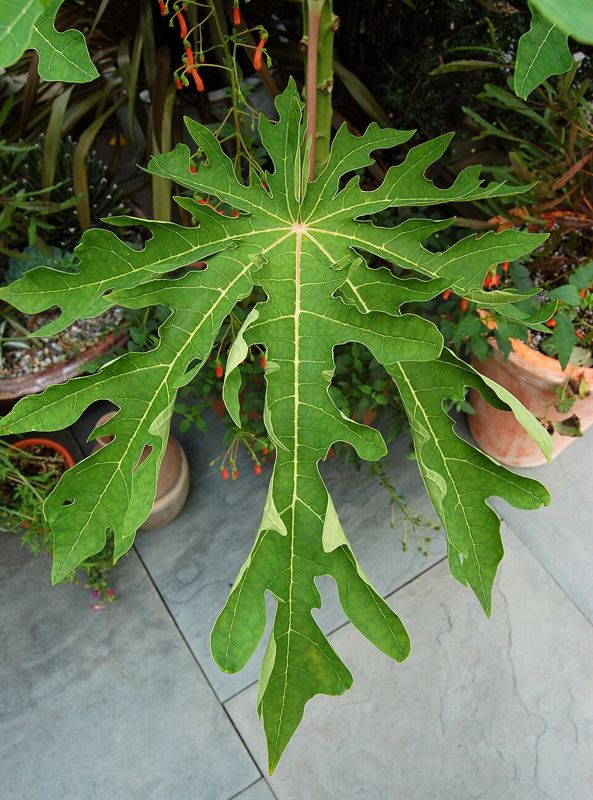
 Photo by and (c)2006 Derek Ramsey (Ram-Man). Location credit to the Chanticleer Garden. / CC BY-SA 3.0 · Source
Papaya
Carica papaya
Overview
A fast-growing tropical fruit tree that can produce fruit within a year of planting from seed, papaya is one of the most rewarding tropical plants to grow. Its sweet, musky orange flesh is rich in papain, a protein-digesting enzyme used in meat tenderizers and digestive supplements. Green papaya is widely used as a vegetable in Southeast Asian cuisine, particularly in Thai green papaya salad.
Growing Conditions
How to Grow Papaya
Papaya (Carica papaya) is a tree that grows to about 20 feet tall and 13 feet wide.
To grow papaya, give it full sun. It is hardy across USDA hardiness zones 10b–12. Plant it in rich, well-drained, fertile soil; does not tolerate waterlogging, at a slightly acidic pH of 5.5–7. It does best with consistently moist to wet soil.
Exact sowing, transplanting, and harvest months shift by climate zone — the planting calendar below lays them out for cool through hot regions. Food and forage in one stand — plant it where both you and the pollinators can reach.
Companion Planting & Soil
Papaya grows well alongside banana, sweet potato, beans, and comfrey.
Good Companions
Planting Calendar
When to sow, transplant, and harvest by growing zone.
| Zone | Action | Months | Notes |
|---|---|---|---|
| Warm (8-9) | Start Indoors | Jan — Feb | Start seeds indoors 2-3 months before transplanting; needs 70-80°F to germinate |
| Warm (8-9) | Transplant | Apr — May | Transplant after all frost danger; full sun; sheltered from wind |
| Warm (8-9) | Harvest | Oct — Dec | Harvest when skin turns yellow; fruits year-round once mature in ideal conditions |
| Hot (10+) | Direct Sow | Mar — May | Direct sow in frost-free areas; fruits in 9-11 months from seed |
| Hot (10+) | Transplant | Feb — Apr | Transplant seedlings; rich, well-drained soil; heavy feeder |
| Hot (10+) | Harvest | Aug — Dec | Continuous harvest once fruiting begins; pick green for cooking or ripe for eating fresh |
Uses
In the Kitchen
In the kitchen, papaya turns up in more than one form: ripe fruit eaten fresh or in smoothies; green papaya in Thai salads (som tam) and curries; seeds eaten as a peppery condiment.
Medicinal & Folk Use
In herbal and folk tradition, it has been valued in several ways: papain enzyme aids protein digestion; rich in vitamin C, vitamin A, and folate; traditional use for intestinal parasites (papaya seed). These are traditional uses, not medical advice.
Beyond the Garden
Papaya earns its keep past the plate, too: extremely fast-growing tropical fruit (fruit within 1 year); papain extracted commercially for meat tenderizers.
Safety Notes
Ripe papaya is safe. Green papaya and its latex are traditionally avoided in pregnancy, and the latex can trigger reactions in latex-allergic people. Older leaves concentrate the alkaloid carpaine — cook young leaves, and do not juice mature ones.
The Field Library
Books from the Futurespore shelf that go deeper on plants like this one.
- The Modern Herbal Dispensatory a working reference for tinctures, salves, and doses once you get serious
- Northeast Foraging region-tuned wild food guidance with clear lookalike warnings
- Braiding Sweetgrass reframes growing and gathering as a relationship of reciprocity
These are Bookshop.org affiliate links — they support independent bookstores and earn Futurespore a small commission at no extra cost to you. Browse the full Futurespore Bookshelf.