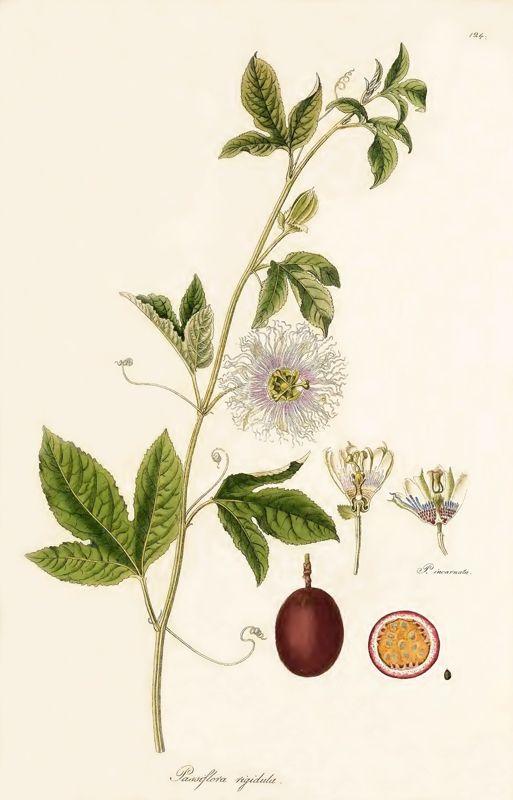
 Joseph Franz von Jacquin / Public domain · Source
Passion fruit
Passiflora incarnata
Overview
A tropical vine that produces one of the most intensely aromatic and flavorful fruits in the world, with a complex sweet-tart taste and heady tropical perfume. The wrinkled, unpretentious exterior gives no hint of the extraordinary pulp inside, which is used to flavor everything from cocktails to cheesecakes. The flowers are among the most spectacular and intricate in the plant kingdom.
Growing Conditions
How to Grow Passion fruit
Passion fruit (Passiflora incarnata) is a perennial vine that grows to about 16 feet tall and 10 feet wide.
To grow passion fruit, give it full sun. It is hardy across USDA hardiness zones 6–10. Plant it in rich, well-drained, slightly acidic soil, at a slightly acidic pH of 5.5–6.5. It does best with even, moderate watering.
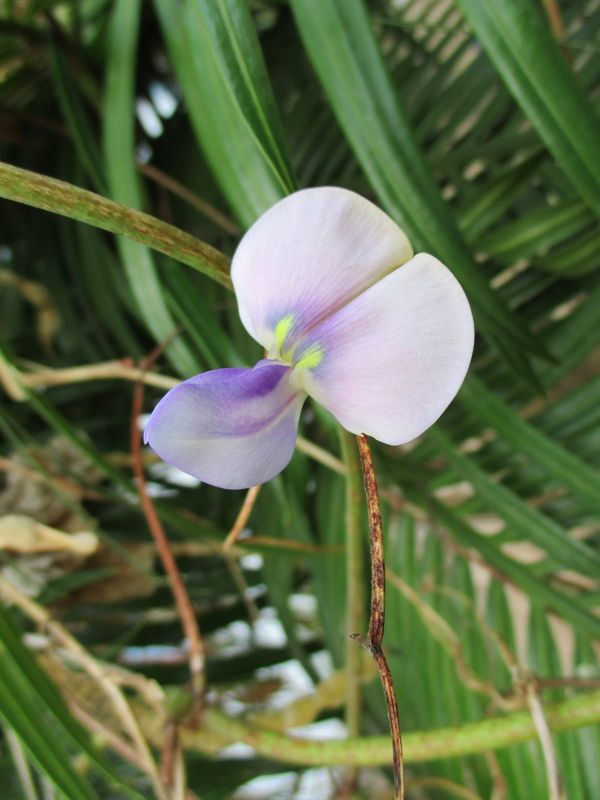
Exact sowing, transplanting, and harvest months shift by climate zone — the planting calendar below lays them out for cool through hot regions. Its purple flowers appear from March through November, offering high value to pollinators. Give it a season to establish, and it carries itself through the dry stretches.
Companion Planting & Soil
Passion fruit grows well alongside banana, sweet potato, and comfrey.
Good Companions
Planting Calendar
When to sow, transplant, and harvest by growing zone.
| Zone | Action | Months | Notes |
|---|---|---|---|
| Cold (1-2) | Start Indoors | Feb — Mar | Start indoors; grow as annual or greenhouse plant north of zone 9 |
| Cold (1-2) | Transplant | Jun — Jun | Transplant outdoors as annual; will not survive frost |
| Cool (3-4) | Start Indoors | Jan — Feb | Start indoors; treat as annual; needs trellis |
| Cool (3-4) | Transplant | May — Jun | Transplant after all frost; annual in zones 3-6 |
| Moderate (5-7) | Transplant | Apr — May | Plant in spring; maypop (P. incarnata) hardy to zone 6 |
| Moderate (5-7) | Harvest | Aug — Oct | Maypop: harvest when fruit drops or skin wrinkles; wait for full color |
| Moderate (5-7) | Prune | Mar — Apr | Prune back dead growth in early spring; fruits on new growth |
| Warm (8-9) | Transplant | Mar — Apr | Plant in spring; perennial in zones 8-9 with mulch |
| Warm (8-9) | Harvest | Jul — Oct | Harvest when fruit drops from vine; wrinkled skin means ripe |
| Warm (8-9) | Prune | Feb — Mar | Prune in late winter; remove dead and crossing vines |
| Hot (10+) | Transplant | Feb — Mar | Plant in spring; evergreen perennial in zone 10+ |
| Hot (10+) | Harvest | Jun — Nov | Harvest fallen fruit; two flushes per year in ideal conditions |
| Hot (10+) | Prune | Jan — Feb | Light pruning to control size |
Uses
In the Kitchen
In the kitchen, passion fruit turns up in more than one form: pulp used in juices, cocktails, and mousse; drizzled over yogurt, ice cream, and pavlova; concentrated into syrup and curd for baking.
Medicinal & Folk Use
In herbal and folk tradition, it has been valued in several ways: rich in vitamin C and beta-carotene; leaf and flower tea traditionally used as a mild sedative; contains piceatannol, studied for metabolic health. These are traditional uses, not medical advice.
Beyond the Garden
Passion fruit earns its keep past the plate, too: spectacularly ornate flowers for ornamental trellises; vigorous vine for privacy screens in tropical climates.
Safety Notes
Unripe fruit contains cyanogenic glycosides; only eat ripe fruit. Leaves used medicinally but may interact with sedatives.
The Field Library
Books from the Futurespore shelf that go deeper on plants like this one.
- The Modern Herbal Dispensatory a working reference for tinctures, salves, and doses once you get serious
- Edible Wild Plants a photographic guide organized by season — good for checking an ID twice in the field
- The Resilient Gardener growing staple food through drought, flood, and hard seasons
These are Bookshop.org affiliate links — they support independent bookstores and earn Futurespore a small commission at no extra cost to you. Browse the full Futurespore Bookshelf.