Taro
Colocasia esculenta
Overview
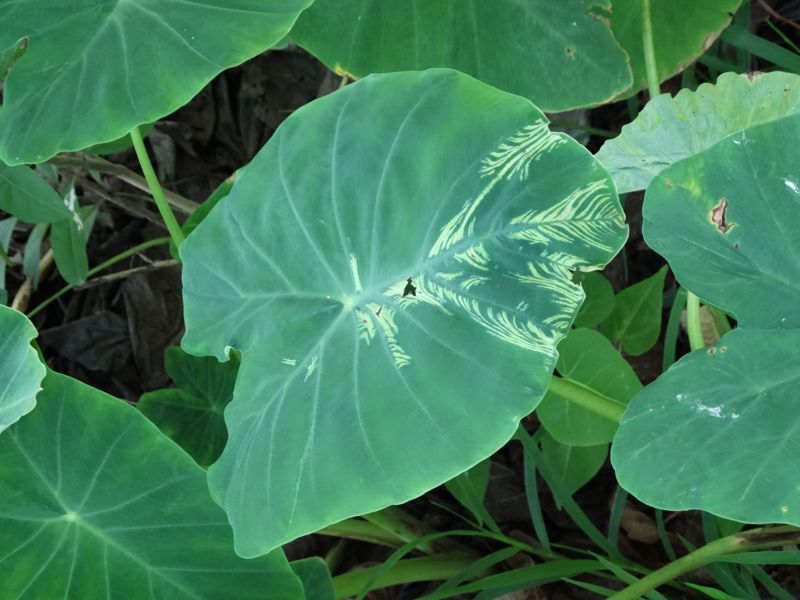
One of the oldest cultivated food plants, taro has nourished tropical civilizations for over 10,000 years — it was a staple in Hawaii long before Polynesian settlers brought it to the islands. Its starchy corms must be thoroughly cooked to neutralize calcium oxalate crystals, but when properly prepared, they have a creamy, slightly nutty flavor. The enormous elephant-ear leaves are also edible when cooked.
Growing Conditions
How to Grow Taro
Taro (Colocasia esculenta) is a forb/herb that grows to about 10 feet tall and 10 feet wide.
To grow taro, give it shade or dappled light. It is hardy across USDA hardiness zones 10–12. Plant it in rich, moist to wet, humusy soil; can grow in standing water, at a slightly acidic pH of 5.5–7. It does best with even, moderate watering.
Exact sowing, transplanting, and harvest months shift by climate zone — the planting calendar below lays them out for cool through hot regions. Its flowers appear from May through June, offering high value to pollinators. It feeds two tables at once: yours and the pollinators’.
Companion Planting & Soil
Taro grows well alongside ginger, banana, and sweet potato.
Good Companions
Planting Calendar
When to sow, transplant, and harvest by growing zone.
| Zone | Action | Months | Notes |
|---|---|---|---|
| Cold (1-2) | Start Indoors | Feb — Mar | Start corms indoors in warm water; grow as annual; needs 200+ frost-free days |
| Cold (1-2) | Transplant | Jun — Jun | Transplant to boggy soil after all frost; ornamental even if corms stay small |
| Cold (1-2) | Harvest | Sep — Oct | Harvest before frost; corms must be cooked — raw taro is toxic |
| Cool (3-4) | Start Indoors | Jan — Feb | Start indoors in warm, wet conditions |
| Cool (3-4) | Transplant | May — Jun | Transplant after last frost; grow in standing water or very wet soil |
| Cool (3-4) | Harvest | Sep — Oct | Dig corms before frost; always cook thoroughly |
| Moderate (5-7) | Transplant | Apr — May | Plant corms 3-4" deep in wet soil; full sun; constant moisture essential |
| Moderate (5-7) | Harvest | Sep — Nov | Harvest when leaves yellow; cure in shade 1 week before storing |
| Warm (8-9) | Transplant | Mar — Apr | Plant in spring; grows well in flooded conditions like rice paddies |
| Warm (8-9) | Harvest | Sep — Dec | Harvest in fall; leaves also edible when cooked thoroughly |
| Hot (10+) | Transplant | Feb — Mar | Plant in spring; perennial in zone 10+; grows in standing water |
| Hot (10+) | Harvest | Sep — Dec | Harvest year-round from mature patches; replant small corms |
Uses
In the Kitchen
In the kitchen, taro turns up in more than one form: corms boiled, steamed, or pounded into poi (Hawaiian staple); sliced and fried as chips; leaves cooked into stews (laing, callaloo).
Medicinal & Folk Use
In herbal and folk tradition, it has been valued in several ways: resistant starch supports gut microbiome health; rich in fiber, potassium, and vitamin E; hypoallergenic — commonly used in elimination diets. These are traditional uses, not medical advice.
Beyond the Garden
Taro earns its keep past the plate, too: dramatic ornamental foliage (elephant ears) for water gardens; culturally significant crop in Pacific Island traditions.
Safety Notes
Raw taro is full of needle-like calcium oxalate crystals — corms and leaves must be thoroughly cooked, never eaten raw, and sensitive people peel the corms with gloves. Critically: ornamental elephant ears (Alocasia) look nearly identical and are NOT food even when cooked — people are poisoned by this mix-up every year. Only eat Colocasia esculenta you can vouch for.
The Field Library
Books from the Futurespore shelf that go deeper on plants like this one.
- The Modern Herbal Dispensatory a working reference for tinctures, salves, and doses once you get serious
- The Forager's Harvest identification, harvest windows, and preparation from someone who eats what he teaches
- Gaia's Garden home-scale permaculture — guilds, food forests, and beds that tend themselves
These are Bookshop.org affiliate links — they support independent bookstores and earn Futurespore a small commission at no extra cost to you. Browse the full Futurespore Bookshelf.