Plantain (Broadleaf)
Plantago major
Overview
One of the most important medicinal plants in Western herbalism, growing in every lawn and sidewalk crack. Native Americans called it 'White Man's Footprint' because it followed European settlers everywhere. Crushed leaves applied to stings, cuts, and rashes provide immediate relief — one of the few foraging plants you can rely on as a first-aid emergency remedy.
Growing Conditions
How to Grow Plantain (Broadleaf)
Plantain (Broadleaf) (Plantago major) is a low rosette perennial that grows to about 12 inches tall and 12 inches wide.
To grow plantain (broadleaf), give it full sun, though it tolerates a little shade. It is hardy across USDA hardiness zones 3–10. Plant it in tolerates compacted, poor, or disturbed soils, at a slightly acidic pH of 5.5–7.5. It does best with even, moderate watering.
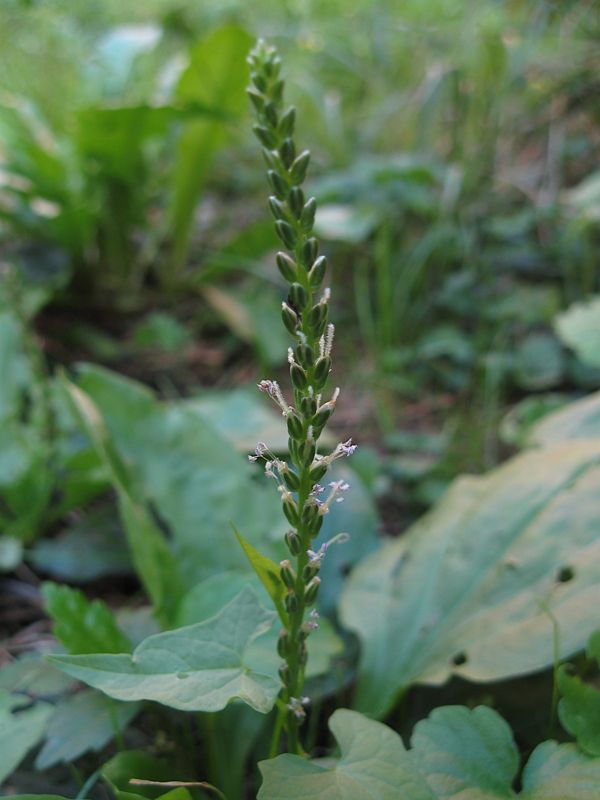
Exact sowing, transplanting, and harvest months shift by climate zone — the planting calendar below lays them out for cool through hot regions. Its green/tan (spike) flowers appear from May through September. Water it in well, then largely leave it be — it forgives a dry week.
Companion Planting & Soil
Planting Calendar
When to sow, transplant, and harvest by growing zone.
| Zone | Action | Months | Notes |
|---|---|---|---|
| Cold (1-2) | Harvest | May — Sep | Young leaves through summer; older leaves get stringy |
| Cool (3-4) | Harvest | Apr — Oct | Most tender in spring before flowering |
| Moderate (5-7) | Harvest | Apr — Nov | Long harvest season; use leaves fresh as poultice |
| Moderate (5-7) | Bloom | May — Sep | Inconspicuous green flower spike — seeds are edible (psyllium relatives) |
| Warm (8-9) | Harvest | Feb — Dec | Year-round in mild climates |
| Hot (10+) | Harvest | Nov — May (wraps) | Cool-season growth; dormant in summer heat |
Uses
In the Kitchen
In the kitchen, plantain (broadleaf) turns up in more than one form: very young leaves in salads (mild, slightly nutty); older leaves cooked like spinach; seeds used like psyllium for digestive health.
Medicinal & Folk Use
In herbal and folk tradition, it has been valued in several ways: crushed leaf poultice for stings, bites, splinters, cuts — immediate relief; anti-inflammatory and antimicrobial; tea soothes coughs and sore throats. These are traditional uses, not medical advice.
Beyond the Garden
Plantain (Broadleaf) earns its keep past the plate, too: indicator of compacted soil — appears where soil needs aeration.
Safety Notes
Not the same as banana-family 'plantain.' Only harvest from un-sprayed areas.
The Field Library
Books from the Futurespore shelf that go deeper on plants like this one.
- Medicinal Herbs: A Beginner's Guide the friendliest on-ramp to growing and using healing herbs at home
- Edible Wild Plants a photographic guide organized by season — good for checking an ID twice in the field
- The Resilient Gardener growing staple food through drought, flood, and hard seasons
These are Bookshop.org affiliate links — they support independent bookstores and earn Futurespore a small commission at no extra cost to you. Browse the full Futurespore Bookshelf.