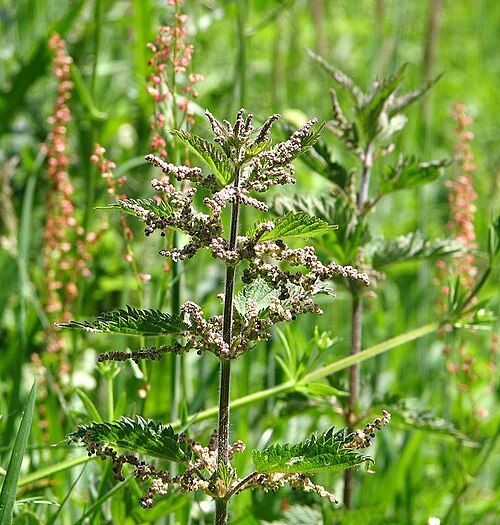
 Geograph (Hugh Venables) via Wikimedia Commons / CC BY-SA 4.0
Stinging Nettle
Urtica dioica
Overview
A foundational forageable food and medicine, dismissed as a weed by anyone who hasn't tasted it cooked. Spring nettle shoots are one of the most nutrient-dense foods on earth — protein-rich, mineral-dense, and exceptional source of iron and calcium. The sting disappears with cooking, drying, or even a quick puree. Once tasted, foragers plan their year around the spring nettle window.
Mentioned in The Mycelial Grimoire
Posts on the Grimoire that reference Stinging Nettle.
Growing Conditions
How to Grow Stinging Nettle
Stinging Nettle (Urtica dioica) is an upright perennial that grows to about 5 feet tall and 2 feet wide.
To grow stinging nettle, give it full sun, though it tolerates a little shade. It is hardy across USDA hardiness zones 3–10. Plant it in moist, rich, nitrogen-heavy soil; thrives in disturbed ground, at a slightly acidic pH of 5.5–7.5. It does best with consistently moist to wet soil.
Exact sowing, transplanting, and harvest months shift by climate zone — the planting calendar below lays them out for cool through hot regions. Its greenish (catkin-like spike) flowers appear from June through September, offering moderate value to pollinators. Come to it with patience — its value is the kind that rewards knowing.
Companion Planting & Soil
Stinging Nettle grows well alongside fruit trees (mines nitrogen), tomato, and mint.
Good Companions
Planting Calendar
When to sow, transplant, and harvest by growing zone.
| Zone | Action | Months | Notes |
|---|---|---|---|
| Cold (1-2) | Harvest | Apr — Jun | Spring shoots are tender and most nutritious; wear gloves |
| Cool (3-4) | Harvest | Mar — May | Pick top 4 inches before flowering — most tender, no grit |
| Moderate (5-7) | Harvest | Mar — May | Spring harvest only; once flowering begins, leaves develop gritty crystals |
| Moderate (5-7) | Harvest | Aug — Oct | Cut back after seeding for tender fall regrowth |
| Moderate (5-7) | Bloom | Jun — Sep | Inconspicuous green flowers; wind-pollinated |
| Warm (8-9) | Harvest | Feb — Apr | Late winter / early spring harvest |
| Hot (10+) | Harvest | Dec — Mar (wraps) | Cool-season growth in mild winters |
Uses
In the Kitchen
In the kitchen, stinging nettle turns up in more than one form: cooked like spinach — soups, frittatas, ravioli filling, pesto; dried for tea (high in iron and chlorophyll); fermented into beer or made into nettle wine.
Medicinal & Folk Use
In herbal and folk tradition, it has been valued in several ways: spring tonic — historically used for seasonal allergies (modern studies support antihistamine effects); iron-rich — traditional treatment for anemia and postpartum recovery; root tincture used for benign prostatic hyperplasia. These are traditional uses, not medical advice.
Beyond the Garden
Stinging Nettle earns its keep past the plate, too: excellent compost activator — high nitrogen; fiber historically used for cordage and cloth (nettle linen); indicator of fertile, nitrogen-rich soil.
Safety Notes
Fresh leaves cause stinging skin irritation — wear thick gloves and long sleeves to harvest. Cooking, drying, or pureeing destroys the sting. People with kidney issues should consult a doctor before regular consumption.
The Field Library
Books from the Futurespore shelf that go deeper on plants like this one.
- The Modern Herbal Dispensatory a working reference for tinctures, salves, and doses once you get serious
- Edible Wild Plants a photographic guide organized by season — good for checking an ID twice in the field
- The Resilient Gardener growing staple food through drought, flood, and hard seasons
These are Bookshop.org affiliate links — they support independent bookstores and earn Futurespore a small commission at no extra cost to you. Browse the full Futurespore Bookshelf.