Overview
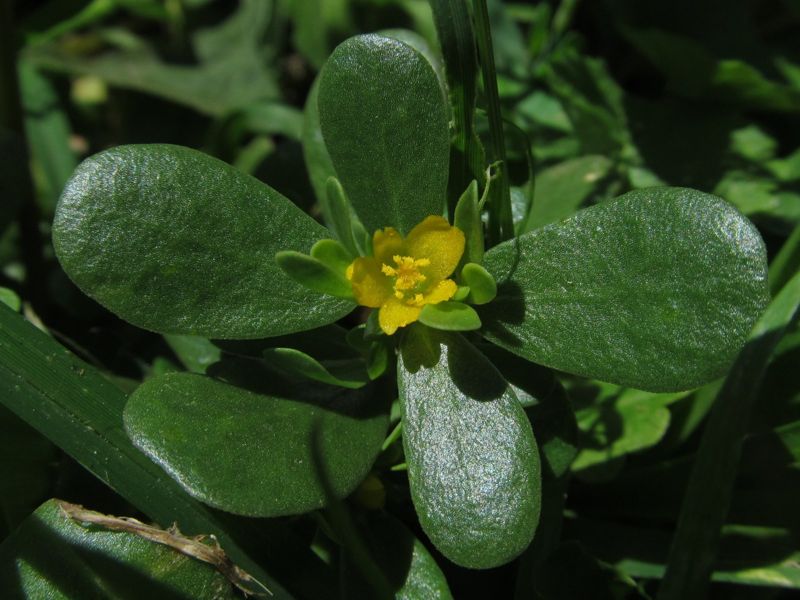
Often dismissed as a common weed, purslane is actually one of the most nutritious plants on earth — containing more omega-3 fatty acids than any other leafy green and rivaling fish for ALA content. Its succulent, lemony leaves have been eaten across cultures for thousands of years, from ancient Egypt to Mexico to China. Purslane thrives in hot, dry conditions where other greens fail.
Growing Conditions
How to Grow Purslane
Purslane (Portulaca oleracea) is a forb/herb that grows to about 8 inches tall and 8 inches wide.
To grow purslane, give it full sun. It is hardy across USDA hardiness zones 5–8. Plant it in any well-drained soil; thrives in poor, sandy conditions, at a slightly acidic pH of 5.5–7.5. It does best with even, moderate watering.
Exact sowing, transplanting, and harvest months shift by climate zone — the planting calendar below lays them out for cool through hot regions. Its flowers appear from April through June, offering high value to pollinators. Food and forage in one stand — plant it where both you and the pollinators can reach.
Companion Planting & Soil
Purslane grows well alongside corn, tomato, pepper, and basil.
Good Companions
Planting Calendar
When to sow, transplant, and harvest by growing zone.
| Zone | Action | Months | Notes |
|---|---|---|---|
| Cold (1-2) | Direct Sow | Jun — Jul | Direct sow after soil warms to 70°F; scatter seeds on surface |
| Cold (1-2) | Harvest | Jul — Sep | Harvest stems and leaves 60 days after sowing; high in omega-3 fatty acids |
| Cool (3-4) | Direct Sow | May — Jul | Sow when soil is warm; often self-sows or appears as "weed" |
| Cool (3-4) | Harvest | Jun — Sep | Cut stems above lowest leaves for regrowth; succulent texture |
| Moderate (5-7) | Direct Sow | Apr — Jul | Sow after last frost; golden purslane is a cultivated variety |
| Moderate (5-7) | Harvest | May — Oct | Harvest continuously; flavor is mild and slightly tart |
| Warm (8-9) | Direct Sow | Mar — Aug | Sow spring through summer; thrives in heat and drought |
| Warm (8-9) | Harvest | Apr — Oct | Harvest before flowering for best texture |
| Hot (10+) | Direct Sow | Feb — Sep | Long season; extremely heat and drought tolerant |
| Hot (10+) | Harvest | Mar — Nov | Harvest throughout warm season |
Uses
In the Kitchen
In the kitchen, purslane turns up in more than one form: raw in salads for succulent, lemony crunch; stir-fried or sautéed in Mexican and Middle Eastern cuisine; pickled stems and leaves.
Medicinal & Folk Use
In herbal and folk tradition, it has been valued in several ways: richest plant source of omega-3 ALA fatty acids; high in vitamins A, C, and E; mucilage soothes the digestive tract. These are traditional uses, not medical advice.
Beyond the Garden
Purslane earns its keep past the plate, too: edible ground cover that suppresses weeds; drought-tolerant living mulch; indicator of healthy, well-mineralized soil.
Safety Notes
High in oxalates — moderation if you are prone to kidney stones. Foragers: hairy-stemmed spurge sprawls flat right beside purslane and has milky sap; purslane’s sap is clear. Snap a stem before you pick.
The Field Library
Books from the Futurespore shelf that go deeper on plants like this one.
- The Modern Herbal Dispensatory a working reference for tinctures, salves, and doses once you get serious
- Edible Wild Plants a photographic guide organized by season — good for checking an ID twice in the field
- The Resilient Gardener growing staple food through drought, flood, and hard seasons
These are Bookshop.org affiliate links — they support independent bookstores and earn Futurespore a small commission at no extra cost to you. Browse the full Futurespore Bookshelf.