 Hardyplants at English Wikipedia / Public domain · Source
Wild bergamot
Monarda fistulosa
Overview
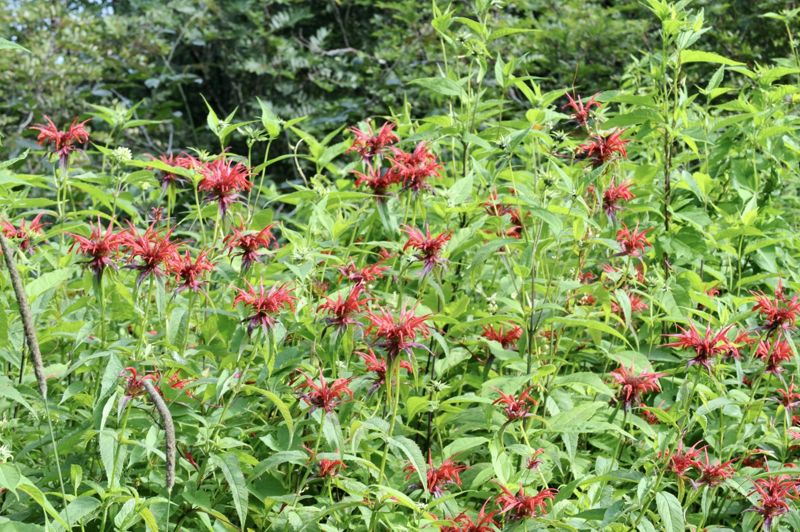
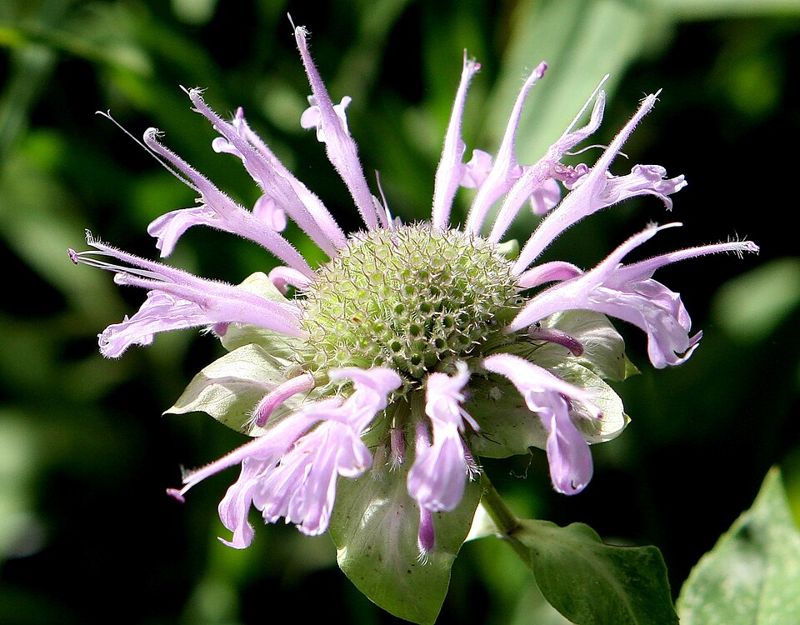
A native prairie wildflower closely related to bee balm, wild bergamot produces lavender-pink pompon flowers that are magnets for bees, butterflies, and hummingbirds. It was one of the most widely used medicinal plants among Native American peoples, applied to everything from colds to wounds. Its thymol-rich leaves make a pleasant, aromatic tea often called Oswego tea.
Mentioned in The Mycelial Grimoire
Posts on the Grimoire that reference Wild bergamot.
Growing Conditions
How to Grow Wild bergamot
Wild bergamot (Monarda fistulosa) is a perennial forb/herb that grows to about 5 feet tall and 2 feet wide.
To grow wild bergamot, give it partial sun to partial shade. It is hardy across USDA hardiness zones 4a–7. Plant it in well-drained, average soil; drought-tolerant once established, at a slightly acidic pH of 6–7. It does best with consistently moist to wet soil.
Exact sowing, transplanting, and harvest months shift by climate zone — the planting calendar below lays them out for cool through hot regions. Its red flowers appear from June through August, offering high value to pollinators. Settle it in its first year, and drought becomes its problem to solve, not yours.
Companion Planting & Soil
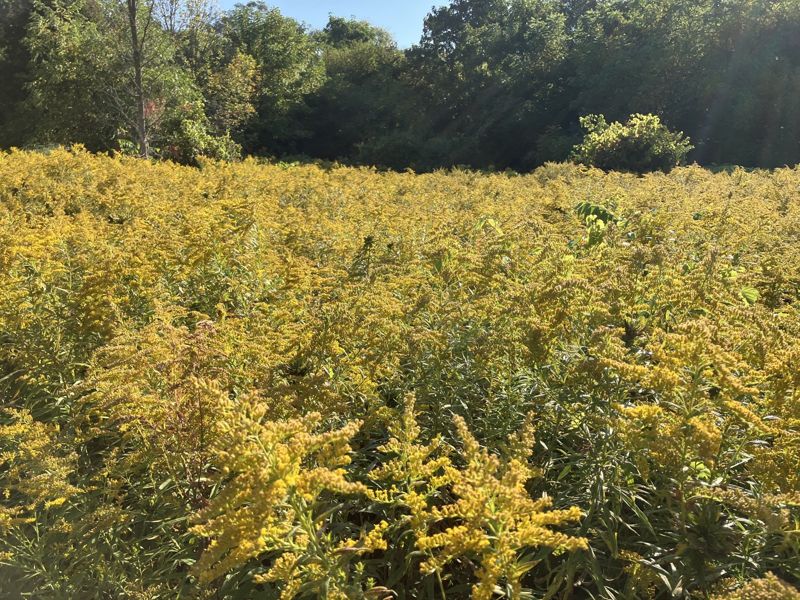
Wild bergamot grows well alongside echinacea, goldenrod, little bluestem, and aster.
Good Companions
Planting Calendar
When to sow, transplant, and harvest by growing zone.
| Zone | Action | Months | Notes |
|---|---|---|---|
| Cold (1-2) | Transplant | May — Jun | Plant in spring; native prairie plant; very cold hardy to zone 3 |
| Cold (1-2) | Bloom | Jul — Aug | Lavender flowers attract native bees, butterflies, and hummingbirds |
| Cool (3-4) | Transplant | Apr — May | Plant in spring; drought tolerant once established; attracts native bees |
| Cool (3-4) | Bloom | Jun — Aug | Midsummer bloom; excellent in meadow gardens |
| Moderate (5-7) | Transplant | Mar — Apr | Plant in spring; less mildew-prone than cultivated bee balm |
| Moderate (5-7) | Bloom | Jun — Aug | Blooms June-August; leaves make fragrant tea (Earl Grey substitute) |
| Moderate (5-7) | Divide | Mar — Apr | Divide every 3 years; spreads by rhizomes |
| Warm (8-9) | Transplant | Feb — Mar | Plant in late winter/spring; tolerates heat and dry soil |
| Warm (8-9) | Bloom | May — Jul | Late spring through summer bloom |
| Hot (10+) | Transplant | Nov — Dec | Plant in fall; very adaptable; needs some chill |
| Hot (10+) | Bloom | May — Jul | Summer bloom; heat tolerant |
Uses
In the Kitchen
In the kitchen, wild bergamot turns up in more than one form: leaves brewed as aromatic herbal tea (Oswego tea); flowers as edible garnish; leaves used as oregano-like seasoning.
Medicinal & Folk Use
In herbal and folk tradition, it has been valued in several ways: contains thymol — a natural antiseptic; traditional remedy for colds, fevers, and respiratory infections; poultice for wound healing and insect bites. These are traditional uses, not medical advice.
Beyond the Garden
Wild bergamot earns its keep past the plate, too: critical native pollinator plant; prairie and meadow restoration species; deer-resistant native perennial.
Safety Notes
Leaves edible in small amounts for tea. Contains thymol which is mildly toxic in large quantities. Safe for culinary use in moderation.
The Field Library
Books from the Futurespore shelf that go deeper on plants like this one.
- The Modern Herbal Dispensatory a working reference for tinctures, salves, and doses once you get serious
- Edible Wild Plants a photographic guide organized by season — good for checking an ID twice in the field
- The Resilient Gardener growing staple food through drought, flood, and hard seasons
These are Bookshop.org affiliate links — they support independent bookstores and earn Futurespore a small commission at no extra cost to you. Browse the full Futurespore Bookshelf.