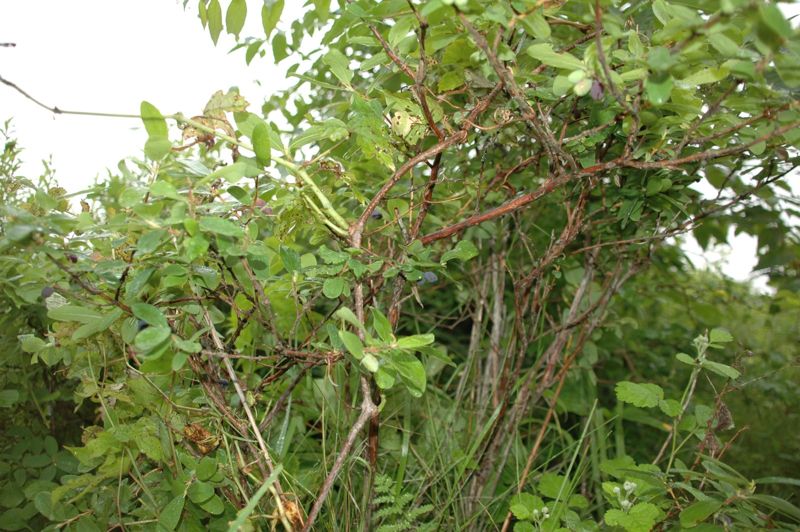
 No machine-readable author provided. Svdmolen assumed (based on copyright claims). / CC BY-SA 3.0 · Source
Sea buckthorn
Hippophae rhamnoides
Overview
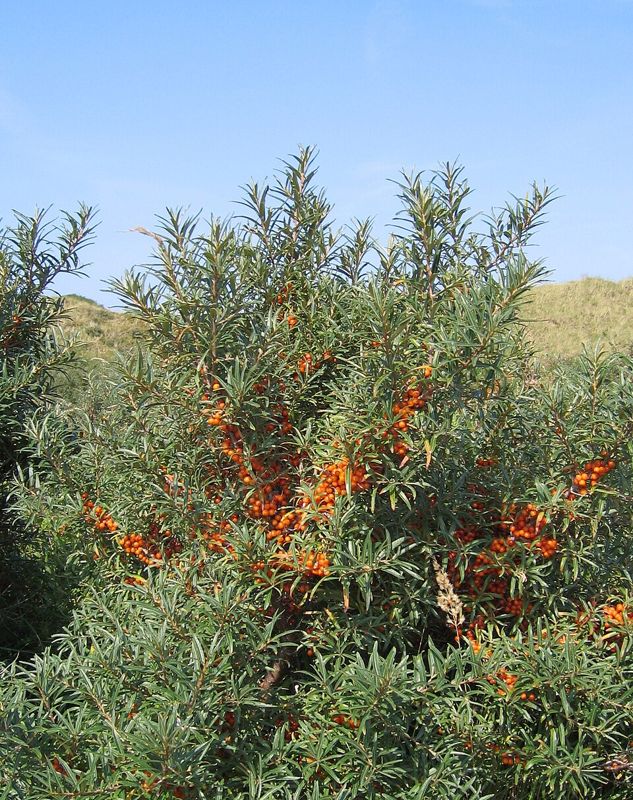
A thorny, nitrogen-fixing shrub that produces brilliant orange berries packed with an extraordinary concentration of vitamins, omega fatty acids, and antioxidants. Sea buckthorn thrives in harsh, coastal, and arid conditions where few other fruits survive. Its berries are too sour and astringent to eat fresh but make exceptional juices, jams, and the beauty industry's prized sea buckthorn oil.
How to Grow Sea buckthorn
Plant it in sandy, well-drained, lean soil; salt-tolerant; fixes nitrogen, at a slightly acidic pH of 5.5–8.
Exact sowing, transplanting, and harvest months shift by climate zone — the planting calendar below lays them out for cool through hot regions. The details above are a starting point — your ground will teach you the rest.
Companion Planting & Soil
Sea buckthorn grows well alongside clover, comfrey, and elder.
Good Companions
Planting Calendar
When to sow, transplant, and harvest by growing zone.
| Zone | Action | Months | Notes |
|---|---|---|---|
| Cold (1-2) | Transplant | Apr — May | Plant in spring; extremely hardy (-40°F); nitrogen-fixing; need male + female for fruit |
| Cold (1-2) | Harvest | Aug — Sep | Harvest by cutting fruiting branches — berries burst if hand-picked; freeze then shake off |
| Cold (1-2) | Prune | Mar — Apr | Prune in early spring; wear thick gloves — stems have sharp thorns |
| Cool (3-4) | Transplant | Mar — Apr | Plant in spring; full sun; tolerates poor, sandy, or saline soil |
| Cool (3-4) | Harvest | Aug — Sep | Cut-and-freeze method easiest; berries extremely high in vitamin C and omega fatty acids |
| Moderate (5-7) | Transplant | Mar — Apr | Plant in spring; spreads by suckers — install root barrier if needed |
| Moderate (5-7) | Harvest | Jul — Sep | Harvest when bright orange; process into juice, jam, or oil |
Uses
In the Kitchen
In the kitchen, sea buckthorn turns up in more than one form: juice blended with sweeter fruits for tart, vitamin-rich drinks; processed into jam, syrup, and fruit leather; oil used as a culinary supplement.
Medicinal & Folk Use
In herbal and folk tradition, it has been valued in several ways: berries contain vitamins C, E, and rare omega-7 fatty acids; berry and seed oil prized for skin repair and anti-aging; traditional use for digestive and respiratory support in Central Asian medicine. These are traditional uses, not medical advice.
Beyond the Garden
Sea buckthorn earns its keep past the plate, too: nitrogen-fixing coastal erosion control; wildlife food source for birds; salt-tolerant hedgerow for exposed sites.
The Field Library
Books from the Futurespore shelf that go deeper on plants like this one.
- Edible Wild Plants a photographic guide organized by season — good for checking an ID twice in the field
- The Resilient Gardener growing staple food through drought, flood, and hard seasons
These are Bookshop.org affiliate links — they support independent bookstores and earn Futurespore a small commission at no extra cost to you. Browse the full Futurespore Bookshelf.