Hops
Humulus lupulus
Overview
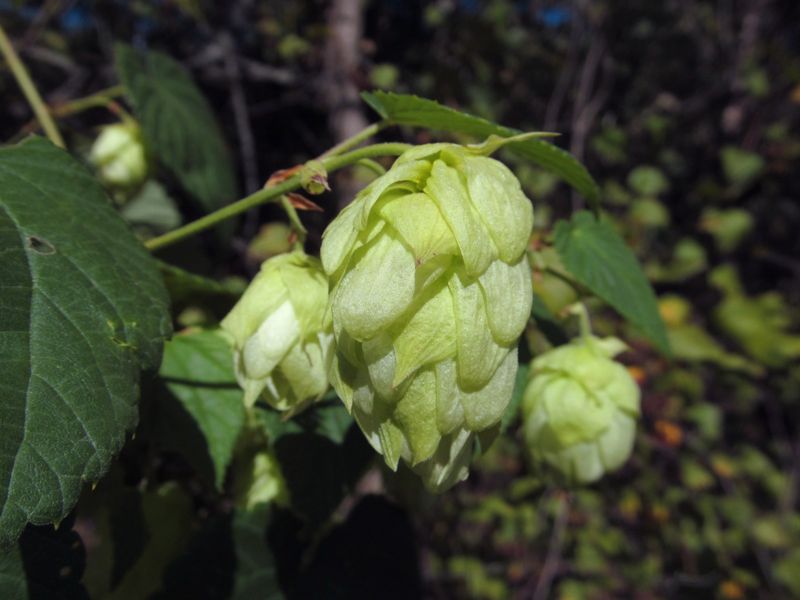
The vigorous climbing vine whose female flowers (cones) give beer its characteristic bitterness, flavor, and aroma. Hops are one of the fastest-growing temperate plants, sending bines up to 25 feet in a single season from perennial rootstock. Beyond brewing, hops have a long history as a sedative herb — hop pillows were a traditional remedy for insomnia.
How to Grow Hops
Plant it in deep, well-drained, fertile loam, at a slightly acidic pH of 6–7.5.
Exact sowing, transplanting, and harvest months shift by climate zone — the planting calendar below lays them out for cool through hot regions. Give it what it asks for here, and it will find its place in the garden.
Companion Planting & Soil
Hops grows well alongside clover, yarrow, and chamomile.
Good Companions
Planting Calendar
When to sow, transplant, and harvest by growing zone.
| Zone | Action | Months | Notes |
|---|---|---|---|
| Cold (1-2) | Transplant | May — May | Plant rhizomes 4" deep horizontally in spring; full sun; needs tall trellis (15-20 ft) |
| Cold (1-2) | Harvest | Aug — Sep | Harvest cones when papery and aromatic; squeeze test — springs back when ready |
| Cool (3-4) | Transplant | Apr — May | Plant rhizomes in spring; vigorous perennial vine; choose disease-resistant cultivars |
| Cool (3-4) | Harvest | Aug — Sep | Pick cones at papery stage; lupulin glands should be golden yellow and sticky |
| Moderate (5-7) | Transplant | Mar — Apr | Plant in early spring; grows 20+ ft per season; train 2-3 strongest bines per string |
| Moderate (5-7) | Harvest | Aug — Sep | Harvest and dry immediately; use within a year for brewing or dry for sleep pillows |
| Moderate (5-7) | Prune | Mar — Apr | Cut all growth to ground in late winter; new bines emerge in spring |
| Warm (8-9) | Transplant | Feb — Mar | Plant in late winter; may struggle in deep South — needs winter chill |
| Warm (8-9) | Harvest | Jul — Aug | Harvest before heat degrades oils; cascade and chinook varieties best for warm zones |
Uses
In the Kitchen
In the kitchen, hops turns up in more than one form: primary bittering and flavoring agent in beer; young hop shoots eaten like asparagus in spring (a delicacy); infused into teas and herbal bitters.
Medicinal & Folk Use
In herbal and folk tradition, it has been valued in several ways: traditional sedative and sleep aid (hop pillows); bitter digestive tonic; contains phytoestrogens studied for menopausal support. These are traditional uses, not medical advice.
Beyond the Garden
Hops earns its keep past the plate, too: vigorous ornamental vine for privacy screens and arbors; dried cones used in wreaths and seasonal decorations.
Safety Notes
Hops are seriously toxic to dogs — spent brewing hops have killed dogs through malignant hyperthermia, so compost them where a dog cannot dig. Hops are sedative; medicinal amounts can add to other sedatives.
The Field Library
Books from the Futurespore shelf that go deeper on plants like this one.
- Northeast Foraging region-tuned wild food guidance with clear lookalike warnings
- Braiding Sweetgrass reframes growing and gathering as a relationship of reciprocity
These are Bookshop.org affiliate links — they support independent bookstores and earn Futurespore a small commission at no extra cost to you. Browse the full Futurespore Bookshelf.