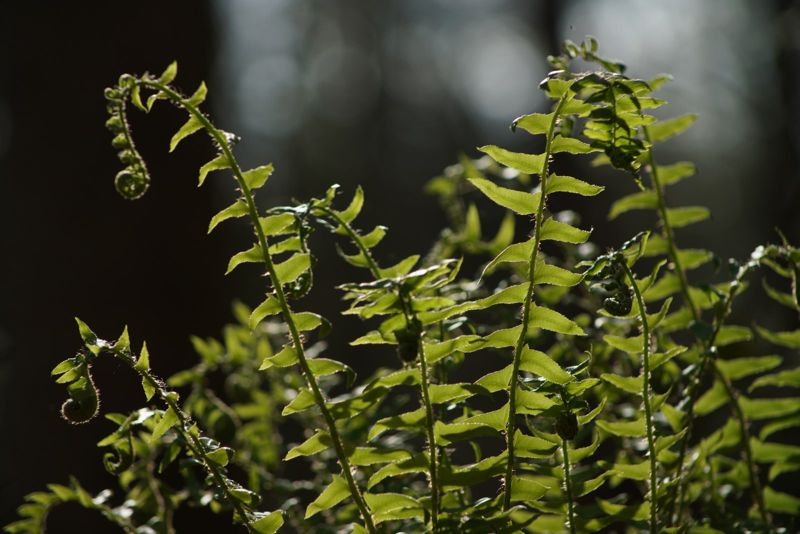
Christmas fern
Polystichum acrostichoides
Overview
An elegant, evergreen native fern that maintains its dark green fronds through winter, providing year-round structure in woodland gardens. Named because its leaflets resemble tiny Christmas stockings, this fern is one of the most adaptable and trouble-free native plants for shade. It plays an important role in preventing erosion on woodland slopes with its dense root system.
Growing Conditions
How to Grow Christmas fern
Christmas fern (Polystichum acrostichoides) is a fern that grows to about 2 feet tall and 1.5 feet wide.
To grow christmas fern, give it shade or dappled light. It is hardy across USDA hardiness zones 4–7. Plant it in rich, moist, humusy woodland soil, at a slightly acidic pH of 4.5–7. It does best with even, moderate watering.
Exact sowing, transplanting, and harvest months shift by climate zone — the planting calendar below lays them out for cool through hot regions. Its flowers appear from May through October. Come to it with patience — its value is the kind that rewards knowing.
Companion Planting & Soil
Christmas fern grows well alongside trillium, hosta, bleeding heart, and wild ginger.
Good Companions
Planting Calendar
When to sow, transplant, and harvest by growing zone.
| Zone | Action | Months | Notes |
|---|---|---|---|
| Cold (1-2) | Transplant | May — Jun | Plant in spring; native evergreen fern; one of the most adaptable ferns for dry shade |
| Cold (1-2) | Bloom | May — Aug | Evergreen fronds; no flowers — reproduces by spores; remove old fronds in spring |
| Cool (3-4) | Transplant | Apr — May | Plant in spring; evergreen even in harsh winters; humus-rich soil |
| Cool (3-4) | Bloom | Apr — Oct | Evergreen; new fiddleheads emerge in spring; one of easiest native ferns |
| Moderate (5-7) | Transplant | Mar — Apr | Plant in spring; tolerates drier shade than most ferns; low maintenance |
| Moderate (5-7) | Bloom | Mar — Nov | Year-round foliage; deer and rabbit resistant |
| Moderate (5-7) | Divide | Mar — Apr | Divide crowns in early spring; plant divisions immediately in shade |
| Warm (8-9) | Transplant | Feb — Mar | Plant in late winter; shade essential; deer resistant |
| Warm (8-9) | Bloom | Feb — Dec | Evergreen; excellent in woodland and shade gardens |
| Hot (10+) | Transplant | Nov — Dec | Plant in fall; shade and moisture required |
| Hot (10+) | Bloom | Jan — Dec | Evergreen in shade; keep moist |
Uses
Medicinal & Folk Use
In herbal and folk tradition, it has been valued in several ways: traditional Cherokee use of rhizome tea for stomach complaints; historically used for rheumatism and toothache in folk medicine. These are traditional uses, not medical advice.
Beyond the Garden
Christmas fern earns its keep past the plate, too: year-round structure in shade gardens; erosion control on woodland slopes; cut fronds used in holiday decorations.
Safety Notes
Not recommended as food. Ferns as a group contain thiaminase and some contain ptaquiloside, a carcinogen; this species has no established food use. Grow it as a native evergreen ground cover.
The Field Library
Books from the Futurespore shelf that go deeper on plants like this one.
- The Modern Herbal Dispensatory a working reference for tinctures, salves, and doses once you get serious
- The Resilient Gardener growing staple food through drought, flood, and hard seasons
These are Bookshop.org affiliate links — they support independent bookstores and earn Futurespore a small commission at no extra cost to you. Browse the full Futurespore Bookshelf.