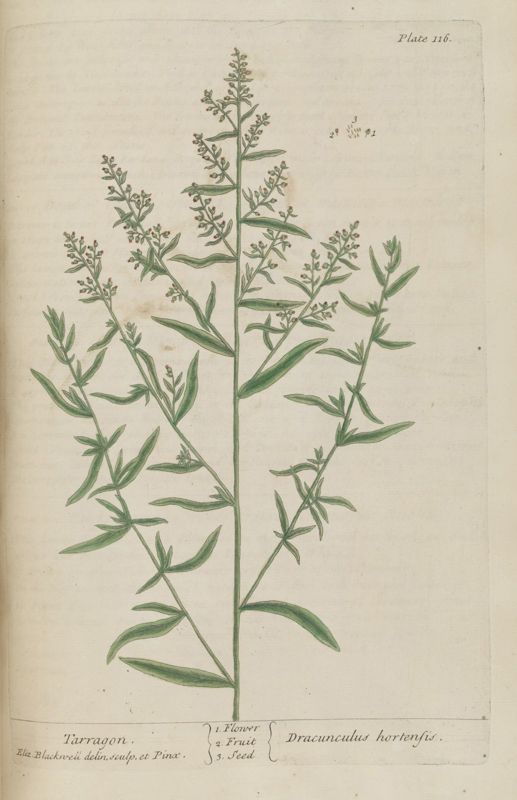
 Oceancetaceen - Alice Chodura / Public domain · Source
Tarragon
Artemisia dracunculus
Overview
The sophisticated French herb with a distinctive anise-like flavor that is indispensable in béarnaise sauce, fines herbes, and French vinaigrette. True French tarragon (A. dracunculus var. sativa) must be propagated by division — it rarely produces viable seed. Russian tarragon, which does grow from seed, has vastly inferior flavor. A little goes a long way with this potent, aromatic herb.
Growing Conditions
How to Grow Tarragon
Tarragon (Artemisia dracunculus) is a perennial forb/herb that grows to about 2 feet tall and 12 inches wide.
To grow tarragon, give it full sun. It is hardy across USDA hardiness zones 4–9. Plant it in well-drained, average to lean, sandy soil, at a slightly acidic pH of 6–7.5. It does best with even, moderate watering.
Exact sowing, transplanting, and harvest months shift by climate zone — the planting calendar below lays them out for cool through hot regions. Its flowers appear from July through August, offering high value to pollinators. Settle it in its first year, and drought becomes its problem to solve, not yours.
Companion Planting & Soil
Tarragon grows well alongside eggplant, pepper, and tomato.
Good Companions
Planting Calendar
When to sow, transplant, and harvest by growing zone.
| Zone | Action | Months | Notes |
|---|---|---|---|
| Cold (1-2) | Transplant | May — Jun | Plant divisions after last frost; French tarragon does not grow from seed |
| Cold (1-2) | Harvest | Jun — Sep | Harvest stems as needed; best flavor before flowering |
| Cool (3-4) | Transplant | Apr — May | Plant divisions in spring; full sun, well-drained soil |
| Cool (3-4) | Harvest | May — Oct | Harvest as needed; freeze for winter use |
| Moderate (5-7) | Transplant | Mar — Apr | Plant in spring; French tarragon is propagated by division only |
| Moderate (5-7) | Harvest | Apr — Oct | Harvest throughout growing season |
| Moderate (5-7) | Divide | Mar — Apr | Divide every 2-3 years to maintain vigor |
| Warm (8-9) | Transplant | Feb — Mar | Plant in late winter; mulch in summer heat |
| Warm (8-9) | Harvest | Mar — Nov | Harvest as needed; may go dormant in summer |
| Warm (8-9) | Divide | Feb — Mar | Divide every 2-3 years in early spring |
| Hot (10+) | Transplant | Nov — Dec | Plant in fall; struggles in extreme heat and humidity |
| Hot (10+) | Harvest | Nov — Apr (wraps) | Best in cool months; semi-dormant in summer |
Uses
In the Kitchen
In the kitchen, tarragon turns up in more than one form: essential in béarnaise sauce and fines herbes; tarragon vinegar for salad dressings; pairs beautifully with chicken, fish, and eggs.
Medicinal & Folk Use
In herbal and folk tradition, it has been valued in several ways: traditional appetite stimulant and digestive aid; historically used for toothache pain relief. These are traditional uses, not medical advice.
Beyond the Garden
Tarragon earns its keep past the plate, too: must be propagated by division (French tarragon doesn't come true from seed).
Safety Notes
Normal culinary use is safe — estragole, its aroma compound, only matters in concentrated supplements. Skin contact causes dermatitis in some people.
The Field Library
Books from the Futurespore shelf that go deeper on plants like this one.
- The Modern Herbal Dispensatory a working reference for tinctures, salves, and doses once you get serious
- The Forager's Harvest identification, harvest windows, and preparation from someone who eats what he teaches
- Gaia's Garden home-scale permaculture — guilds, food forests, and beds that tend themselves
These are Bookshop.org affiliate links — they support independent bookstores and earn Futurespore a small commission at no extra cost to you. Browse the full Futurespore Bookshelf.