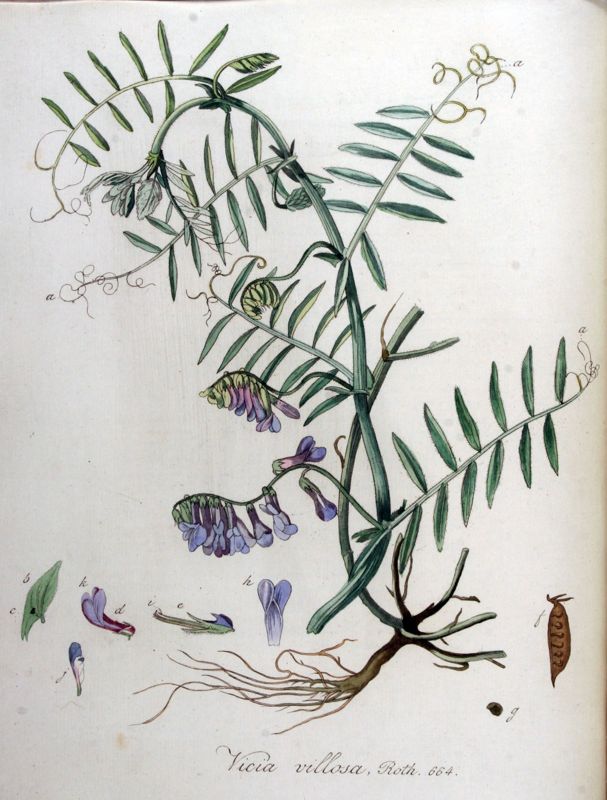
 Jan Kops / Public domain · Source
Hairy vetch
Vicia villosa
Overview
One of the most effective nitrogen-fixing cover crops available, hairy vetch can add 100-200 pounds of nitrogen per acre to the soil. Its sprawling, vining growth smothers weeds and its purple flowers are a beautiful bonus for pollinators. When crimped or mowed at flowering, it creates a dense mulch mat that suppresses weeds and feeds the soil as it decomposes.
Growing Conditions
How to Grow Hairy vetch
Hairy vetch (Vicia villosa) is an annual vine that grows to about 1.5 feet tall and 3 feet wide.
To grow hairy vetch, give it full sun. It is hardy across USDA hardiness zones 8a–9. Plant it in adaptable to most well-drained soils; drought-tolerant, at a slightly acidic pH of 5.5–7. It does best with even, moderate watering.
Exact sowing, transplanting, and harvest months shift by climate zone — the planting calendar below lays them out for cool through hot regions. Its purple flowers appear from February through March, offering moderate value to pollinators. Water it in well, then largely leave it be — it forgives a dry week.
Companion Planting & Soil
Hairy vetch grows well alongside winter rye, oats, and annual ryegrass.
Good Companions
Planting Calendar
When to sow, transplant, and harvest by growing zone.
| Zone | Action | Months | Notes |
|---|---|---|---|
| Cold (1-2) | Direct Sow | Aug — Sep | Fall sow; winter-hardy legume; fixes significant nitrogen; vining habit |
| Cold (1-2) | Harvest | May — Jun | Mow or crimp at peak bloom; mulch layer suppresses weeds; wait 2 weeks to plant |
| Cool (3-4) | Direct Sow | Aug — Sep | Fall sow; often mixed with winter rye for structure and nitrogen |
| Cool (3-4) | Harvest | May — Jun | Terminate at flowering; rye/vetch mix creates excellent no-till mulch |
| Moderate (5-7) | Direct Sow | Sep — Oct | Fall sow; overwinters; purple flowers in spring attract pollinators |
| Moderate (5-7) | Harvest | Apr — May | Roll-crimp or mow at bloom; decomposes and releases nitrogen over 4-6 weeks |
| Warm (8-9) | Direct Sow | Sep — Nov | Fall sow; vigorous vining habit — combine with rye for support |
| Warm (8-9) | Harvest | Mar — Apr | Terminate in spring before it sets seed — can become weedy |
| Hot (10+) | Direct Sow | Oct — Dec | Fall/winter sow; fixes 90-200 lbs nitrogen per acre |
| Hot (10+) | Harvest | Feb — Mar | Terminate in late winter/early spring |
Uses
Beyond the Garden
Hairy vetch earns its keep past the plate, too: premier nitrogen-fixing cover crop (100-200 lbs N/acre); weed-suppressing mulch mat when crimped at flowering; erosion control and soil building on slopes.
Safety Notes
Seeds are toxic to cattle and horses and vetch is not a human food plant. Grown as a nitrogen-fixing cover crop and green manure, not for eating.
The Field Library
Books from the Futurespore shelf that go deeper on plants like this one.
- Gaia's Garden home-scale permaculture — guilds, food forests, and beds that tend themselves
- The Resilient Gardener growing staple food through drought, flood, and hard seasons
These are Bookshop.org affiliate links — they support independent bookstores and earn Futurespore a small commission at no extra cost to you. Browse the full Futurespore Bookshelf.