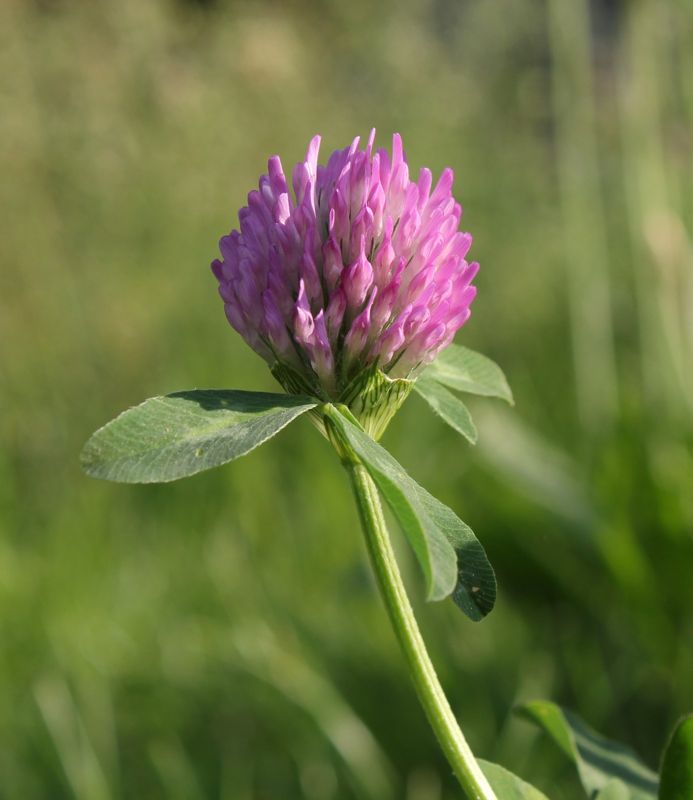
 George Chernilevsky / Public domain · Source
Red clover
Trifolium pratense
Overview
A short-lived perennial legume that has been valued for centuries as both a soil-building cover crop and a medicinal herb. Its round, pink-red flower heads are rich in isoflavones and have been used in traditional medicine for respiratory health and hormonal support. Red clover fixes substantial nitrogen and is a beloved foraging plant for both pollinators and herbal tea enthusiasts.
Growing Conditions
How to Grow Red clover
Red clover (Trifolium pratense) is a perennial graminoid that grows to about 2 feet tall and 2 feet wide.
To grow red clover, give it full sun. It is hardy across USDA hardiness zones 7b–10. Plant it in well-drained, fertile loam; adaptable to most soils, at a slightly acidic pH of 5.5–7. It does best with even, moderate watering.
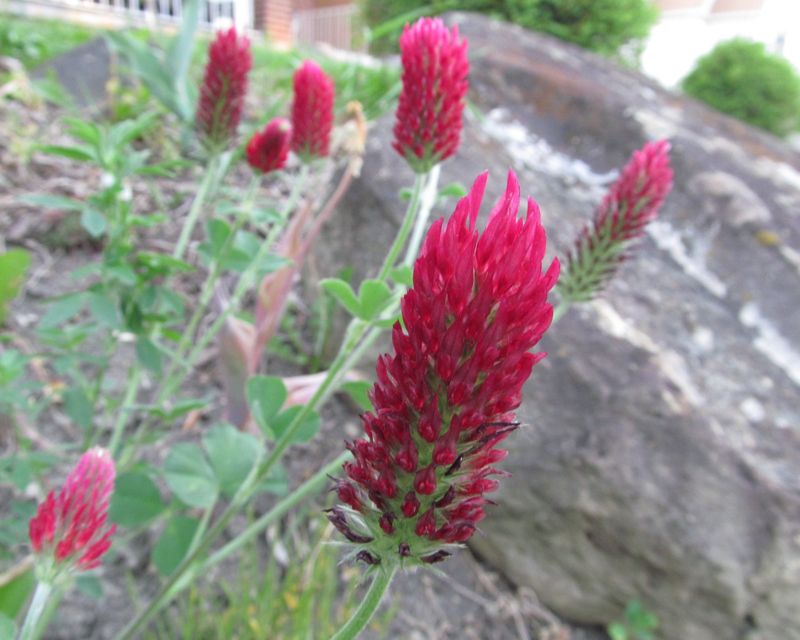
Exact sowing, transplanting, and harvest months shift by climate zone — the planting calendar below lays them out for cool through hot regions. Its red flowers appear from May through June, offering high value to pollinators. Let a few flowers go by unpicked; the bees will thank you, and so will next season.
Companion Planting & Soil
Red clover grows well alongside grass, oats, and annual ryegrass.
Good Companions
Planting Calendar
When to sow, transplant, and harvest by growing zone.
| Zone | Action | Months | Notes |
|---|---|---|---|
| Cold (1-2) | Direct Sow | Apr — May | Direct sow in spring; short-lived perennial (2-3 years); nitrogen fixer |
| Cold (1-2) | Bloom | Jun — Aug | Purple-pink flower heads; excellent bee forage; fixes 75-200 lbs nitrogen per acre |
| Cool (3-4) | Direct Sow | Mar — May | Sow in spring; or frost-seed in late winter onto snow or frozen soil |
| Cool (3-4) | Bloom | May — Sep | Blooms through summer; mow to prevent seed set if not wanted as permanent cover |
| Moderate (5-7) | Direct Sow | Mar — Apr | Sow in spring or fall; taller than white clover — good forage and green manure |
| Moderate (5-7) | Direct Sow | Aug — Sep | Fall sow for overwintering |
| Moderate (5-7) | Bloom | Apr — Sep | Summer bloom; flower heads edible in salads or dried for tea |
| Warm (8-9) | Direct Sow | Sep — Oct | Fall sow; purple flower heads are edible and medicinal |
| Warm (8-9) | Bloom | Mar — May | Spring bloom; goes dormant or dies in summer heat |
| Hot (10+) | Direct Sow | Oct — Nov | Fall sow; short-lived in hot zones — may act as annual |
| Hot (10+) | Bloom | Feb — Apr | Brief spring bloom |
Uses
In the Kitchen
In the kitchen, red clover turns up in more than one form: flower heads dried for herbal tea; young leaves and sprouts added to salads; flower blossoms as edible garnish.
Medicinal & Folk Use
In herbal and folk tradition, it has been valued in several ways: isoflavones studied for menopausal symptom relief; traditional respiratory remedy for coughs and bronchitis; blood-purifying spring tonic in folk medicine. These are traditional uses, not medical advice.
Beyond the Garden
Red clover earns its keep past the plate, too: nitrogen-fixing cover crop and green manure; important bee and pollinator forage crop; pasture and hay crop for livestock.
Safety Notes
Harvest only clean, vigorous stands: diseased or mouldy clover can contain toxic alkaloids even when it looks fine. Its isoflavones are estrogen-like — check with a doctor before medicinal use if you have a hormone-sensitive condition or take blood thinners.
The Field Library
Books from the Futurespore shelf that go deeper on plants like this one.
- Medicinal Herbs: A Beginner's Guide the friendliest on-ramp to growing and using healing herbs at home
- Northeast Foraging region-tuned wild food guidance with clear lookalike warnings
- Braiding Sweetgrass reframes growing and gathering as a relationship of reciprocity
These are Bookshop.org affiliate links — they support independent bookstores and earn Futurespore a small commission at no extra cost to you. Browse the full Futurespore Bookshelf.