Saffron crocus
Crocus sativus
Overview
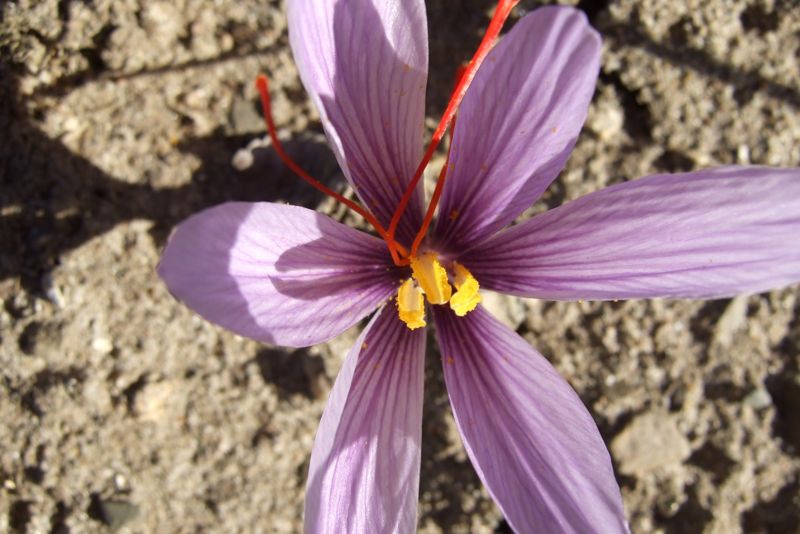
The source of saffron, the world's most expensive spice by weight — each crocus produces just three tiny red stigmas that must be hand-harvested and dried. It takes about 150,000 flowers to produce a single kilogram of saffron, explaining its legendary price. Unlike spring crocus, saffron crocus blooms in fall, pushing up its lavender flowers in October and November.
How to Grow Saffron crocus
Plant it in well-drained, calcareous, sandy or loamy soil, at a near-neutral pH of 6–8.
Exact sowing, transplanting, and harvest months shift by climate zone — the planting calendar below lays them out for cool through hot regions. The details above are a starting point — your ground will teach you the rest.
Companion Planting & Soil
Saffron crocus grows well alongside thyme, rosemary, and lavender.
Good Companions
Planting Calendar
When to sow, transplant, and harvest by growing zone.
| Zone | Action | Months | Notes |
|---|---|---|---|
| Cold (1-2) | Transplant | Aug — Sep | Plant corms 4" deep in late summer; full sun; blooms in FALL, not spring |
| Cold (1-2) | Bloom | Oct — Oct | Lavender flowers with red stigmas; pick stigmas morning of bloom day |
| Cool (3-4) | Transplant | Aug — Sep | Plant corms in late summer; well-drained soil; needs dry summer dormancy |
| Cool (3-4) | Bloom | Oct — Nov | Pick 3 red stigmas per flower; dry immediately; 150 flowers = 1 gram saffron |
| Moderate (5-7) | Transplant | Sep — Oct | Plant in early fall; multiplies each year; divide every 3-4 years |
| Moderate (5-7) | Bloom | Oct — Nov | Fall bloom; harvest stigmas with tweezers; most expensive spice by weight |
| Moderate (5-7) | Divide | Jun — Jul | Dig and divide corms during summer dormancy; replant immediately |
| Warm (8-9) | Transplant | Sep — Oct | Plant in fall; needs some winter chill to bloom; raised beds for drainage |
| Warm (8-9) | Bloom | Nov — Dec | Late fall bloom; protect from heavy rain during flowering |
Uses
In the Kitchen
In the kitchen, saffron crocus turns up in more than one form: saffron — the world's most expensive and prized spice; essential in paella, risotto Milanese, and bouillabaisse; used in Indian, Persian, and Moroccan sweets and rice dishes.
Medicinal & Folk Use
In herbal and folk tradition, it has been valued in several ways: studied for antidepressant properties comparable to some medications; carotenoids (crocin) support eye health; traditional tonic for mood and vitality. These are traditional uses, not medical advice.
Beyond the Garden
Saffron crocus earns its keep past the plate, too: fall-blooming ornamental garden crocus; specialty crop for small-scale farmers.
Safety Notes
Harvest the three red stigmas only. Autumn crocus (Colchicum autumnale) flowers at the same time, looks similar to an untrained eye, and is deadly: it contains colchicine, for which there is no antidote. Saffron crocus has three stamens and grass-like leaves present at flowering; Colchicum has six stamens and no leaves at flowering. If you did not plant the corm yourself, do not harvest from it.
The Field Library
Books from the Futurespore shelf that go deeper on plants like this one.
- Edible Wild Plants a photographic guide organized by season — good for checking an ID twice in the field
- The Resilient Gardener growing staple food through drought, flood, and hard seasons
These are Bookshop.org affiliate links — they support independent bookstores and earn Futurespore a small commission at no extra cost to you. Browse the full Futurespore Bookshelf.