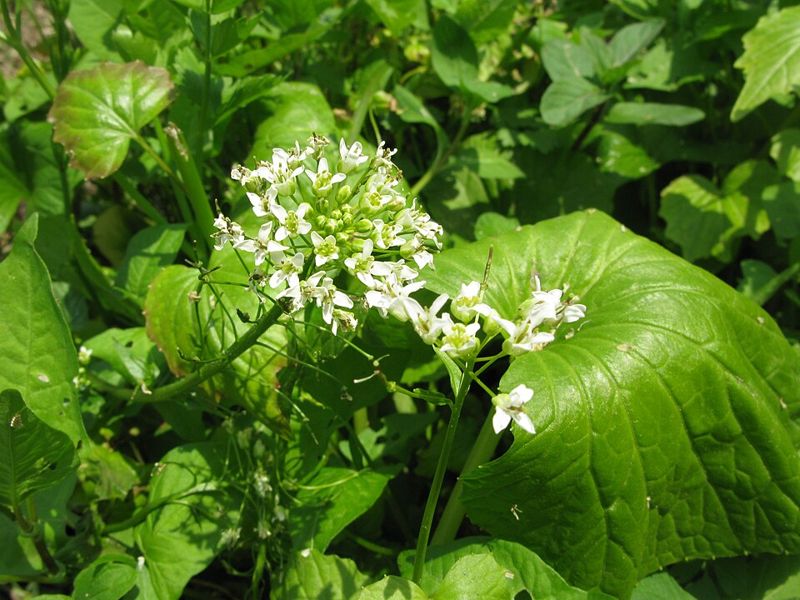
 Qwert1234 / CC BY-SA 3.0 · Source
Wasabi
Wasabia japonica
Overview
The fiery Japanese condiment that is actually one of the most difficult plants to cultivate commercially, requiring cool mountain stream conditions to thrive. True wasabi (Wasabia japonica) is so rare that most 'wasabi' served at sushi restaurants is actually dyed horseradish. Real wasabi has a cleaner, more complex heat that hits the sinuses and fades quickly, unlike the lingering burn of horseradish.
Growing Conditions
How to Grow Wasabi
Wasabi (Wasabia japonica) is a forb/herb that grows to about 12 inches tall and 8 inches wide.
To grow wasabi, give it partial sun to partial shade. It is hardy across USDA hardiness zones 8–12. Plant it in cool, constantly moist, well-drained, rich, gravelly soil near running water, at a slightly acidic pH of 6–7. It does best with consistently moist to wet soil.
In practice, plant out wasabi March to April in cool zones and March to April in moderate zones. Harvest comes March to April in cool zones and March to April in moderate zones. Its flowers appear from May through August, offering moderate value to pollinators. Come to it with patience — its value is the kind that rewards knowing.
Companion Planting & Soil
Wasabi grows well alongside fern, hosta, and ginger.
Good Companions
Planting Calendar
When to sow, transplant, and harvest by growing zone.
| Zone | Action | Months | Notes |
|---|---|---|---|
| Cool (3-4) | Transplant | Mar — Apr | Plant starts in spring; deep shade and constant moisture essential; 55-70°F ideal |
| Cool (3-4) | Harvest | Mar — Apr | Harvest main rhizome after 18-24 months; leaves and petioles also edible year-round |
| Moderate (5-7) | Transplant | Mar — Apr | Plant in cool, shaded spot; stream-side or north-facing slope; one of the hardest plants to grow |
| Moderate (5-7) | Harvest | Mar — Apr | Harvest at 18-24 months; grate fresh — flavor fades in 15 minutes; leaves for salads |
Uses
In the Kitchen
In the kitchen, wasabi turns up in more than one form: freshly grated rhizome for sushi and sashimi; mixed into dressings, mayonnaise, and dips; leaves are edible — pickled or added to salads.
Medicinal & Folk Use
In herbal and folk tradition, it has been valued in several ways: isothiocyanates have potent antimicrobial properties; anti-inflammatory compounds support respiratory health; traditionally used for food safety — kills harmful bacteria in raw fish. These are traditional uses, not medical advice.
Beyond the Garden
Wasabi earns its keep past the plate, too: specialty crop for shade and water gardeners; leaves and petioles also edible and commercially valuable.
The Field Library
Books from the Futurespore shelf that go deeper on plants like this one.
- Medicinal Herbs: A Beginner's Guide the friendliest on-ramp to growing and using healing herbs at home
- Edible Wild Plants a photographic guide organized by season — good for checking an ID twice in the field
- The Resilient Gardener growing staple food through drought, flood, and hard seasons
These are Bookshop.org affiliate links — they support independent bookstores and earn Futurespore a small commission at no extra cost to you. Browse the full Futurespore Bookshelf.