 User:Kilom691 / Public domain · Source
Yarrow
Achillea millefolium
Overview
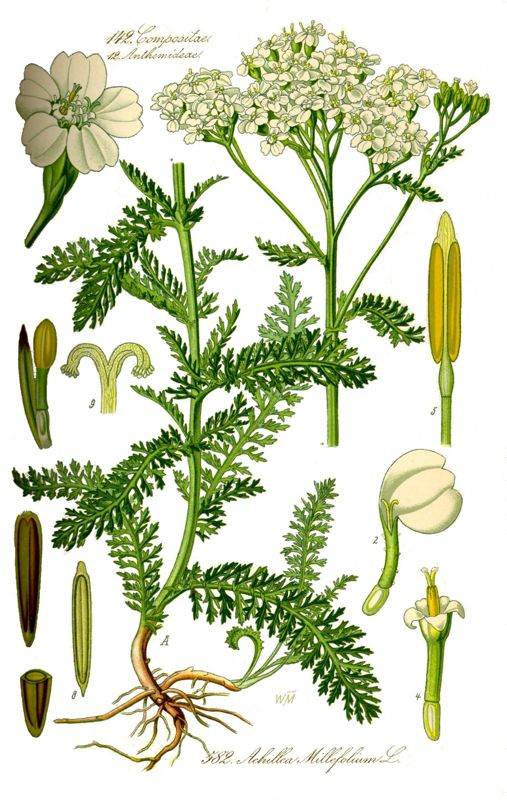
Named for Achilles, who reportedly used it on his soldiers' wounds. One of the most important medicinal plants in Western, Native American, and Chinese traditions. Drought-tolerant once established, attracts a wide range of pollinators including beneficial predatory insects. The 'millefolium' (thousand-leaf) in its name describes its delicate, fern-like foliage.
Growing Conditions
How to Grow Yarrow
Yarrow (Achillea millefolium) is a spreading perennial that grows to about 2.5 feet tall and 2 feet wide.
To grow yarrow, give it full sun. It is hardy across USDA hardiness zones 3–9. Plant it in well-drained, average to poor soil; thrives in lean conditions, at a slightly acidic pH of 5.5–7.5. It does best with even, moderate watering.
Exact sowing, transplanting, and harvest months shift by climate zone — the planting calendar below lays them out for cool through hot regions. Its white (cultivars include pink, yellow, red) flowers appear from June through October, offering high value to pollinators. It is a plant for the low-water garden — patient through heat, slow to complain.
Companion Planting & Soil
Yarrow grows well alongside most vegetables (attracts predatory insects), roses, and fruit trees.
Good Companions
Planting Calendar
When to sow, transplant, and harvest by growing zone.
| Zone | Action | Months | Notes |
|---|---|---|---|
| Cold (1-2) | Start Indoors | Mar — Apr | Surface-sow seeds; light required for germination |
| Cold (1-2) | Transplant | May — Jun | Transplant after frost; tough plants establish quickly |
| Cold (1-2) | Harvest | Jul — Sep | Cut flower heads at peak bloom; dry for medicinal use |
| Cool (3-4) | Direct Sow | Apr — Jun | Direct sow or transplant; once established, drought-tolerant |
| Cool (3-4) | Harvest | Jun — Sep | Harvest leaves and flowers; leaves anytime, flowers at full bloom |
| Moderate (5-7) | Direct Sow | Mar — May | Spring planting; divides easily for free plants |
| Moderate (5-7) | Harvest | Jun — Oct | Continuous leaf harvest; flower harvest in summer |
| Moderate (5-7) | Bloom | Jun — Sep | Long bloom season; deadhead for continued flowering |
| Moderate (5-7) | Divide | Mar — Apr | Divide every 3 years to prevent overcrowding |
| Warm (8-9) | Direct Sow | Feb — Apr | Plant in spring or fall |
| Warm (8-9) | Harvest | May — Nov | Long harvest season; cut to ground in fall |
| Warm (8-9) | Bloom | May — Oct | Extended bloom in mild climates |
| Hot (10+) | Transplant | Jan — Mar | Plant in cool season; struggles in extreme heat |
Uses
In the Kitchen
In the kitchen, yarrow turns up in more than one form: young leaves in salads (very sparingly — bitter); flowers as garnish; traditional ingredient in gruit (pre-hops beer flavoring).
Medicinal & Folk Use
In herbal and folk tradition, it has been valued in several ways: styptic — stops bleeding from minor wounds when crushed leaves applied; tea for fever, colds, and digestive complaints; tincture used for menstrual cramps and circulation. These are traditional uses, not medical advice.
Beyond the Garden
Yarrow earns its keep past the plate, too: beneficial insect attractor — predatory wasps, hoverflies, lacewings; compost activator and dynamic accumulator.
Safety Notes
Avoid during pregnancy, and some people develop photosensitivity from skin contact. Foragers: yarrow’s ferny leaves get confused with poison hemlock and fool’s parsley — yarrow is soft, feathery and aromatic, but if you are not certain, do not pick. Consult an herbalist for therapeutic use.
The Field Library
Books from the Futurespore shelf that go deeper on plants like this one.
- The Modern Herbal Dispensatory a working reference for tinctures, salves, and doses once you get serious
- Edible Wild Plants a photographic guide organized by season — good for checking an ID twice in the field
- The Resilient Gardener growing staple food through drought, flood, and hard seasons
These are Bookshop.org affiliate links — they support independent bookstores and earn Futurespore a small commission at no extra cost to you. Browse the full Futurespore Bookshelf.